Dasu project’s steering body to meet on Jan 8


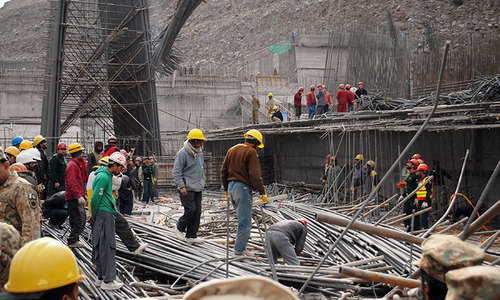
LAHORE: The federal government will have to bear an additional cost of about Rs18 billion if it agrees to accept recommendations of a special committee constituted to quickly resolve the issue of much-delayed land acquisition for 4,300MW Dasu hydropower project, Dawn has learnt.
The committee is set to submit its preliminary report to the project steering committee (PSC) that is likely to meet on Jan 8.
“We have prepared a preliminary report-cum-proposal after holding a series of meetings with the representatives of people affected by the project, local politicians and notables,” a senior official, engaged in the ongoing process/discussions over land acquisition for the project told Dawn on Tuesday.
“According to our assessment,” he said, “the financial impact arising in the wake of accepting the affected people’s demands is approximately three per cent of the total cost (over Rs600bn) for both two stages of this mega project.
“So, now it would be up to the government to accept it or not since we are just supposed to submit our report to the PSC,” he said.
“Besides the report, we have compiled a petition signed by the representatives of affected people, which would be submitted to the PSC by a local MNA,” added the official who requested anonymity.
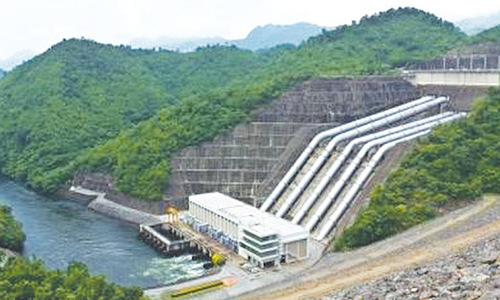
Located on the Indus, some 240km upstream from Tarbela dam, and in the Kohistan area of Khyber Pakhtunkhwa, the project is being funded by the World Bank that, for a third time, extended deadline for one year for utilisation of the funds approved in 2014.
The main reason for non-utilisation of the funds is attributed to land acquisition. The members of the PSC, which was constituted last month with the directive to compile and submit a report about the meetings, demands of the affected people, financial impact (in case of acceptance of demands) and recommendations, have worked out a detailed assessment regarding change of land categories (residential, commercial, agriculture, barren, etc), additional cost, etc, according to the pattern of Bhasha Dam’s land acquisition.
“The assessment we have worked out is in line with the affected people’s demands. Affidavits have already been taken from them that their demands would not increase further in future,” the official said.
Once the PSC agreed to accept the committee’s report / proposal and the affected people’s petition, it would then be submitted to the Executive Committee of the National Economic Council (Ecnec) for final approval, the same procedure adopted in the land acquisition for Bhasha Dam, he said.
And after approval of Ecnec, the required funds would be allocated.
Published in Dawn, December 19th, 2018