LISTS drawn up by individual states — rather than credible multilateral organisations or INGOs — always run the risk of being termed biased and designed to push a political agenda, pillorying geopolitical rivals, and looking the other way where bad behaviour of friends is concerned.
The same can be said for the US list of those states Washington terms violators of religious freedom. As announced by the American secretary of state on Tuesday, Pakistan has been added to this unenviable list “for having engaged in or tolerated systematic... violations of religious freedom”.
One look at those states mentioned on the list — Iran, North Korea, Saudi Arabia, China — shows that apart from the Saudis, all the countries are geopolitical rivals of the US.
Hence, it is fair to ask how unbiased this listing is, what methodology was used, etc. It should also be mentioned that, especially under Donald Trump’s watch, the US itself has become a less welcoming place for ethnic and religious minorities, particularly Muslims, as the alt right and far right have gained ground.
Also, some major US allies, such as India and Israel, have been left off the list, even though the saffron brigade has been making life difficult for minorities in India under Narendra Modi’s watch, while Israel has been abusing the rights of Palestinian Muslims for the past seven decades.
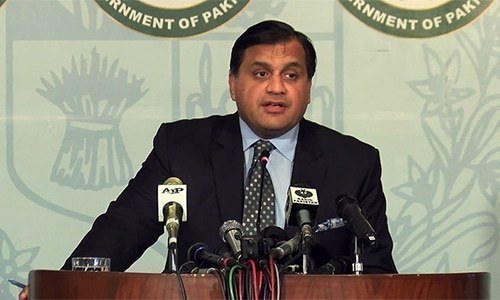
The Foreign Office has rejected Washington’s “unilateral and politically motivated pronouncement”. For Pakistan, it is essential that a knee-jerk reaction is avoided.
While political considerations may well be behind the listing, there is little doubt that much more can be done to make this country a more welcoming place for religious minorities. For example, while Aasia Bibi may have been acquitted, she is still not a ‘free’ citizen.
To avoid getting placed on such lists, we need to make improvements on the legal plane, as well as on a societal level, to create an atmosphere of tolerance and communal harmony.
The FO should engage with Washington and ask the State Department for further clarification regarding what can be done to remove this country from the list.
The US should also realise that, instead of tarring states in this manner, it should engage on the diplomatic level to address any concerns it may have.
Washington and Islamabad must coordinate on the issue of religious freedom instead of indulging in an ugly exchange of public mud-slinging.
Published in Dawn, December 13th, 2018