Saudi got rid of Jamal Khashoggi's body by 'dissolving' it, claims Turkish official



The body of Jamal Khashoggi was “dissolved” after he was murdered and dismembered in the Saudi consulate in Istanbul a month ago, a Turkish official said Friday, as the journalist's fiancee criticised the United States (US) reaction as “devoid of moral foundation”.
The murder of the royal insider-turned-critic has provoked widespread outrage and fuelled an international debate about arms deliveries to Saudi Arabia.
Turkey's chief prosecutor on Wednesday confirmed for the first time that Khashoggi was strangled as soon as he entered the consulate on October 2 as part of a planned hit, and his body was then dismembered and destroyed.
“We now see that it wasn't just cut up, they got rid of the body by dissolving it,” Yasin Aktay, an official in Turkey's ruling party, told the Hurriyet newspaper on Friday.
The claim echoed what a Turkish official had earlier told the Washington Post ─ for which Khashoggi was a contributor ─ that authorities are investigating a theory the body was destroyed in acid.
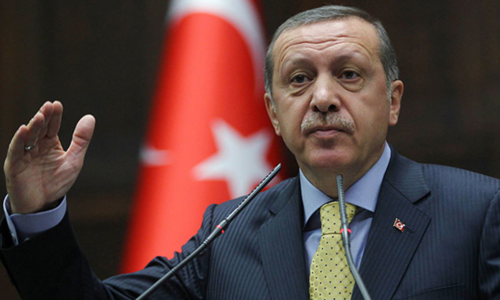
“According to the latest information we have, the reason they cut up the body is it was easier to dissolve it,” said Aktay, an adviser to Turkish President Recep Tayyip Erdogan who was close to Khashoggi. “They aimed to ensure no sign of the body was left.”
'Brutal, barbaric and ruthless'
The Turkish official quoted by the Washington Post said that “biological evidence” found in the consulate's garden indicated the body was likely disposed off near where Khashoggi was killed.
Saudi authorities have denied Turkish police permission to search a well in the consulate's garden, but did allow them to take water samples for analysis, according to local media reports.
US State Department spokesman Robert Palladino on Thursday called for Khashoggi's remains to be located and returned to his family for burial as soon as possible.
Khashoggi's fiancee Hatice Cengiz, who waited outside the consulate as the journalist entered to obtain documents for their upcoming marriage, said what was done to his body was “brutal, barbaric and ruthless”.
“It is now up to the international community to bring the perpetrators to justice. Of all nations, the United States should be leading the way,” Cengiz said in opinion article published in the Washington Post, The Guardian and other media outlets on Friday.
“The Trump administration has taken a position that is devoid of moral foundation,” she wrote, adding that “there will be no cover-up”.
The murder has placed strain on the decades-old alliance between the US and Saudi Arabia and tarnished the image of Crown Prince Mohammed bin Salman, the ultra-conservative kingdom's de facto ruler.
Sanctions 'weeks away': US
US Secretary of State Mike Pompeo has indicated that sanctions would soon be imposed on the individuals responsible.
“It'll take us probably a handful more weeks before we have enough evidence to actually put those sanctions in place, but I think we'll be able to get there,” he said on Thursday, adding that President Donald Trump had vowed accountability for all involved in the “heinous crime”.
Trump has called the affair “one of the worst cover-ups in history”, but warned halting a Saudi arms deal would harm US jobs.
Germany and Switzerland have vowed to halt arms sales to Saudi Arabia until the case is clarified.
After initially insisting Khashoggi left the consulate unharmed, then saying he died in a brawl during an interview gone wrong, the Saudi regime has admitted he was killed by a “rogue operation” and arrested 18 people.
Erdogan has called for the 18 suspects ─ including the alleged 15-man hit team who travelled to Istanbul and left the same day ─ to be extradited for trial in Turkey.
Prince Mohammad bin Salman, who has positioned himself as a Saudi reformer, has denounced the murder as “repulsive” and strongly denied any involvement.
In her article, Cengiz noted that the one-month anniversary of Khashoggi's death fell on the UN's International Day to End Impunity for Crimes against Journalists.
“We must all send a clear message that authoritarian regimes cannot kill journalists ever again,” she said.