One killed in Lanka violence as constitutional crisis persists


COLOMBO: A constitutional crisis gripping Sri Lanka since the president’s shock dismissal of Prime Minister Ranil Wickremesinghe erupted into violence on Sunday, with a man shot dead and two others injured in Colombo.
Police said bodyguards for a Sri Lankan cabinet minister allied to Wickremesinghe fired live rounds inside a government ministry as a mob loyal to President Maithripala Sirisena besieged the minister’s office. Three people were injured but a 34-year-old man died shortly afterwards.
It was the first fatality since Sirisena sacked Wickremesinghe on Friday and installed a former president as prime minister, triggering political chaos in the Indian Ocean nation.
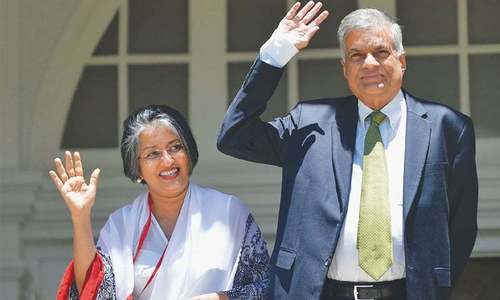
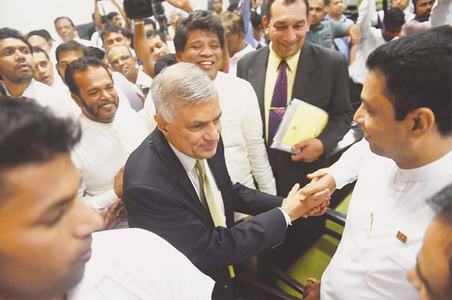
Wickremesinghe has refused to vacate the prime minister’s official residence, barricading himself inside as 1,000 supporters, including chanting Buddhist monks, rallied outside.
The 69-year-old says his sacking is illegal, and wants an emergency session of parliament held to prove he still commands a majority.
Sirisena shut parliament for nearly three weeks to forestall any challenge to his appointment of Mahinda Rajapakse, a former president.
Rajapakse sought blessings at a prominent Buddhist temple on Sunday as he jostled to consolidate his claim to the prime ministership.
But Wickremesinghe got a boost as Sri Lanka’s parliamentary speaker refused to endorse his sacking.
Karu Jayasuriya backed Wickremesinghe’s request to retain his privileges and security until another candidate could prove a majority in parliament, saying it was “democratic and fair”. He also warned the president that shuttering parliament risked “serious and undesirable consequences for the country”.
Officials loyal to Rajapakse said police would now seek a court order to evict Wickremesinghe from the residence, threatening to escalate the standoff.
Soldiers had been stationed near the residence, although Wickremesinghe’s security and official cars were withdrawn on Saturday.
Tensions were high across Colombo, with police leave cancelled amid warnings street violence could break out if the president did not immediately summon parliament to end the impasse.
“Don’t try to create a civil war in this country,” party legislator Karunarathna Paranawithana told reporters at the prime minister’s residence.
Regional neighbours and Western nations have urged all sides to exercise restraint and respect the constitution.
Shooting
But violence broke out inside the petroleum ministry as police guarding Minister Arjuna Ranatunga fired on a mob surrounding his office.
Witnesses saw Ranatunga, 54, also a former World Cup winning cricket captain, rushed from the scene in a tactical helmet and body armour by police commandos.
In his first televised address to the nation since the crisis began, Sirisena said on Sunday he sacked Wickremesinghe over personal differences.
“Apart from our ideological differences, we also had serious cultural differences,” Sirisena said, referring to Wickremesinghe’s liberal background and his own rural conservative upbringing.
He said he had no choice but to appoint Rajapakse, and urged parliament to support him.
Loyalists to Rajapakse still control the headquarters of two state-run television channels.
The controversial new prime minister visited a Buddhist temple on Sunday in the central district of Kandy to seek blessings from monks.
Plans to appoint some cabinet members had been delayed until Monday, aides said. Rajapakse is yet to make a formal statement since being elevated to the new post.
He is seen as being closer to China than Wickremesinghe, who had sought to re-establish stronger ties with traditional ally and regional power India.
The crisis has again put the Indian Ocean in the international spotlight following turmoil in the Maldives over its presidential election.
India said it was “closely following” events in Colombo.
“As a democracy and a close friendly neighbour, we hope that democratic values and the constitutional process will be respected,” India’s foreign ministry spokesman Raveesh Kumar said on Sunday.
Published in Dawn, October 29th, 2018
Download the new Dawn mobile app here: