0
0

About five months have passed since the enactment of Constitution (Twenty-fifth Amendment) Act, 2018, through which the Federally Administered Tribal Areas (Fata) and Provincially Administered Tribal Areas (Pata) were merged with the Khyber Pakhtunkhwa province. However, confusion continues to persist over important legal issues as presently three different procedural laws are in vogue in the province after the merger.
Though no ‘saving clause’ has been included in the Constitution (Twenty-fifth Amendment) Act – which was assented by the President of Pakistan on May 31 and published in the official Gazette on June 4 – for protecting the existing laws in the merged areas of Fata and Pata, those laws still remain operational in those areas.
Before the Fata-KP merger, the President of Pakistan had promulgated the Fata Interim Governance Regulation (FIGR) on May 25 through which the colonial-era Frontier Crimes Regulation, 1901, was repealed. The FIGR, which is a procedural law for Fata, is still in the field despite the merger of those areas with KP.
In Pata, the Shariah Nizam-i-Adl Regulation was introduced in 2009 through which an earlier version of the regulation was repealed. That regulation has been in the field and so far no clarity is given by the federal or the provincial government about its fate.
As such, despite the merger of the two sets of tribal areas with the Khyber Pakhtunkhwa province, the laws applicable to those areas continued to be followed by the government and its administrative officers.
Some legal experts believe that once these areas became part of KP the law in practice in the province automatically became applicable to those areas. They believe that as there was no ‘saving clause’ in the constitutional amendment, the law in practice before the enactment of the amendment could no longer be applied. With each passing day it becomes evident that the constitutional amendment as well as the FIGR was made in a haphazard manner.
Under the erstwhile FCR, the third and final judicial forum was that of a three-member Fata Tribunal. However, with the promulgation of FIGR this tribunal has become non-functional. Presently, around 485 cases are pending before the tribunal, which could not be heard due to the existing uncertainty.
The tenure of the present members had ended on May 22 following which a notification was issued by the Fata Secretariat stating that the Khyber Pakhtunkhwa governor has granted extension in the service period of the existing management of the tribunal for a period of six months.
The controversy emerged soon after the issuance of that notification when the FIGR was promulgated. Through the interim regulation, which provides a legal framework about how to conduct proceedings in civil and criminal cases, the FCR was repealed.
Interestingly, in the FIGR there is no mention of the tribunal and even it has not been mentioned what should be the fate of the cases pending before it, whether these should stand transferred to the Peshawar High Court or the tribunal should hear the cases pending before it.
There are several other laws which are meant for Fata and Pata, but so far the federal or provincial government has not enacted any law or promulgated any ordinance to give protection to those laws.
The most crucial of these laws are Action (in aid of civil power) Regulation 2011, for Fata and Pata. Through these two regulations, legal protection was given to the detentions of hundreds of suspects who were arrested in military operations in different areas and internment centres were set up in parts of Fata and Pata.
One major legal distinction in the merged areas and Khyber Pakhtunkhwa province is the exercise of judicial powers by the executive officers. While the executive magistracy was abolished in rest of the country in 2001 by amending the Code of Criminal Procedure it persisted in Fata and Pata.
Despite the merger with KP this practice, which is considered in violation of Article 175 (3) of the Constitution, still continues. Under the Nizam-i-Adl Regulation the category of executive magistrates is available. A few years ago the Peshawar High Court had declared the provisions of the Nizam-i-Adl Regulation related to executive magistrates as unconstitutional. However, appeals filed against that judgment have been pending before the Supreme Court.
Similarly, under the repealed FCR the political agents and assistant political agents were exercising judicial powers. Their judicial powers were kept intact in the FIGR. Following merger of Fata the nomenclature of political agent and assistant political agent has now been changed to deputy commissioner and assistant commissioner, respectively.
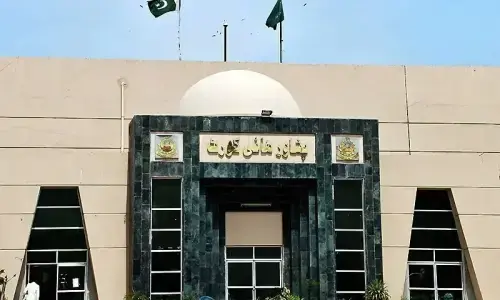
The provision of FIGR through which judicial authority has been assigned to the administrative officers has been challenged before the high court. An advocate Ali Azim Afridi has filed a writ petition challenging the FIGR on the ground that it was in conflict with Article 175 (3) of the Constitution, which guarantees separation of judiciary from the executive.
Previously, Articles 246 and 247 were two major articles dealing with Fata and Pata. Article 246 explained the areas included in Fata and Pata whereas Article 247 explained the administrative and legislative mechanism in relation to these two sets of tribal areas.
Through the constitutional amendment Article 247 was omitted. The Supreme Court and High Court (Extension of Jurisdiction to Fata) Act, 2018, was enacted in April, but the government had not issued a required notification for its enforcement and ultimately the said constitutional amendment was passed in May.
Similarly, in Article 246 certain changes were made through the constitutional amendment so as to merge Fata and Pata with KP.
Legal experts believe that once these areas became part of KP different laws could not be applied there. They believe that on the same grounds the PHC had earlier in 1990 declared the former Pata Regulations, 1975 as unconstitutional and the Supreme Court had upheld that judgment in 1994.
In the light of those judgments it would be difficult for the government to defend the continuation of different laws in parts of the province.
Published in Dawn, October 29th , 2018
Download the new Dawn mobile app here: