Iran, Russia, Turkey presidents meet in high-stakes summit


The presidents of Iran and Russia on Friday backed a military offensive to retake the last rebel-held area of Syria as Turkey's president pushed for a cease-fire, perhaps the final chance to avoid what activists warn will be a humanitarian disaster.
The trilateral summit in Tehran between Iranian President Hassan Rouhani, Russian President Vladimir Putin and Turkish President Recep Tayyip Erdogan had been viewed as a chance for a diplomatic solution before unleashing a full-scale assault on Syria's northwestern Idlib province.
Instead, it further highlighted the stark differences between allies of convenience in Syria's 7-year-old war, the topic of a summit that did not see embattled President Bashar Assad directly represented.
Putin pushed for a muscular military response to crush rebel fighters in Idlib, calling at one point for the “total annihilation of terrorists in Syria.” Rouhani focused on reconstruction and the need for Syria's displaced to return home, while also calling for the US to immediately withdraw.
“The fires of war and bloodshed in Syria are reaching their end,” Rouhani said, while adding that terrorism must “be uprooted in Syria, particularly in Idlib.”
Erdogan, meanwhile, may have been the leader with the most to lose ahead of the offensive. Turkey, which backed opposition forces against Assad, fears a flood of refugees fleeing a military offensive and the destabilisation of areas it now holds in Syria.
“Idlib isn't just important for Syria's future, it is of importance for our national security and for the future of the region,” Erdogan said. “Any attack on Idlib would result in a catastrophe. Any fight against terrorists requires methods based on time and patience.” “We don't want Idlib to turn into a bloodbath,” he added.
Read next: 20,000-30,000 IS fighters left in Iraq, Syria: UN
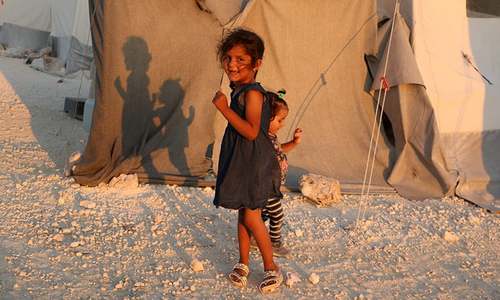
Northwestern Idlib province and surrounding areas are home to about 3 million people nearly half of them civilians displaced from other parts of Syria. That also includes an estimated 10,000 hard-core fighters, including Al Qaeda-linked militants.
For Russia and Iran, both allies of the Syrian government, retaking Idlib is crucial to complete what they see as a military victory in Syria's civil war after Syrian troops recaptured nearly all other major towns and cities, largely defeating the rebellion against Assad.
A bloody offensive that creates a massive wave of death and displacement, however, runs counter to their narrative that the situation in Syria is normalising, and could hurt Russia's longer-term efforts to encourage the return of refugees and get Western countries to invest in Syria's postwar reconstruction.
Russia also wants to maintain its regional presence to fill the vacuum left by America's long uncertainty about what it wants in the conflict.
“We think it's unacceptable when (someone) is trying to shield the terrorists under the pretext of protecting civilians as well as causing damage to Syrian government troops,” Putin said.
“As far as we can see this is also the goal of the attempts to stage chemical weapons incidents by Syrian authorities. We have irrefutable evidence that militants are preparing such operations, such provocations.”
Putin offered no evidence to back his claim.
Explore: The children of terror
The United Nations and Western countries have blamed Assad's forces for chemical weapons attacks during the country's civil war, something denied by Russia and Syria.
Responding to Erdogan's proposal for a cease-fire in Idlib, Putin said “a cease-fire would be good” but indicated that Moscow does not believe it will hold.
“We hope that we will be able to reach an agreement and that our call for reconciliation in the Idlib area will be heard,” the Russian president said. “We hope that the representatives of those terrorist organizations will be smart enough to stop the resistance and lay down arms.”
There was no immediate reaction from fighters in Idlib. Naji al-Mustafa, a spokesman for the Turkey-backed National Front for Liberation, said before the summit that his forces were prepared for a battle that they expect will spark a major humanitarian crisis.
“Idlib is about a lot of international power play and everyone is looking after their interests,” al-Mustafa said.
Also read: US ends funding for reconstruction in Syria
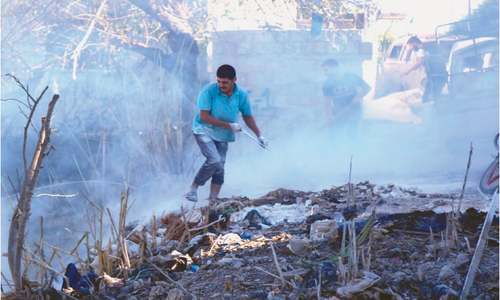
Early on Friday, a series of airstrikes struck villages in southwest Idlib, targeting insurgent posts and killing a fighter, said Rami Abdurrahman, the head of the Britain-based Syrian Observatory for Human Rights. Abdurrahman said suspected Russian warplanes carried out the attack.
Already, close to half a million people have been killed in Syria's long, grinding war, which began first as a popular uprising against Assad and later devolved into a sectarian and regional conflict.
Eight aid agencies warned on Friday that in the coming offensive “it will be the most vulnerable who will pay the heaviest price, with women, children, and the elderly in Idlib unlikely to be able to move to safety.”
Iran, Russia and Turkey all separately face sanctions from the US under the administration of President Donald Trump.
Although America has some 2,000 troops and outposts in Syria, Trump has said he wants to pull those forces out after the war against the Islamic State group dislodged the extremists from vast territories it once held there and in Iraq.
America's ambassador to the United Nations, Nikki Haley, has warned any military offensive in Idlib “would be a reckless escalation.” The US will chair a UN Security Council meeting on Friday about the possible offensive.
“There is no military solution to the Syrian conflict,” Haley said in a statement on Wednesday. “Assad's brutal regime backed by Russia and Iran cannot continue to attack and terrorise Syria's citizens.”