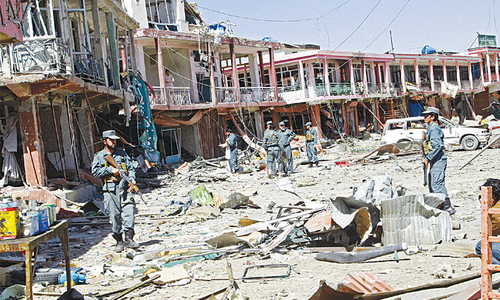
Afghan forces appeared to have finally pushed Taliban fighters from the strategic city of Ghazni on Wednesday, as shopkeepers and residents warily returned to the streets after days of intense ground fighting and United States (US) airstrikes.
Security forces were on patrol and no militants were in sight in the centre of the shattered city, with fighting seeming to have ceased.
But even as shopkeepers swept away ashes and began repairing their burned stores, warnings that the insurgents still lurked nearby stoked fears that the battle could flare again.
An AFP reporter saw Taliban forces in at least one village on the outskirts of the city, and residents said they had been told by security forces that the militants remained uncomfortably close.
“The city smelled of blood,” shopkeeper Basir Ahmad told AFP after fleeing to Kabul on Wednesday. “People were fearful that the fighting could start again anytime.”
Afghan troops backed by US air support have struggled to push the insurgents from Ghazni, which lies just two hours south of Kabul by road, since the assault began late on Thursday.
Authorities have maintained that the city remained in government hands, but the status of the clearance operation was unclear on Wednesday.
As they emerged onto Ghazni's streets, residents told AFP how they hid in basements during the campaign.
“My house was just near the front line, the Taliban would force people to bring them food and tea,” said Hassan Safari.
“The fighting was intense. For two days we had no water and no food. My children would cry when they heard booms and sounds of firing by Taliban from behind our wall.”
Ghazni lies along the major Kabul-Kandahar highway, effectively serving as a gateway between Kabul and the militant strongholds in the south.
The assault on the city has been the largest tactical onslaught since an unprecedented truce in June brought fighting between the Taliban and security forces to a temporary halt, providing war-weary Afghans some relief.
But the United Nations (UN) warned of “extreme human suffering” caused by the latest fighting.
“Reports indicate that the casualty toll in Ghazni is immense,” the UN's special representative in Afghanistan Tadamichi Yamamoto said on Wednesday.
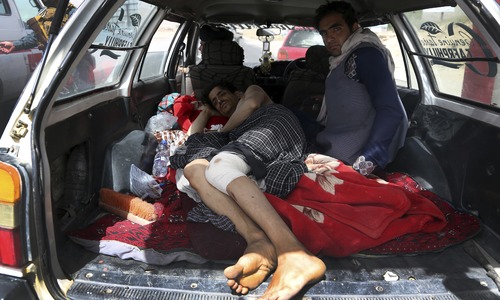
“Unconfirmed estimates range from 110 to 150 civilian casualties. Reliable information indicates that the Ghazni Public Hospital is overwhelmed by a continuous influx of injured government forces, Taliban fighters and civilians.”
He said civilians faced a grim situation, with no power and water and food shortages, while blocked roads were stopping some families from fleeing.
Ghazni residents confirmed that food supplies had run low, and that prices continued to rise.
“Our food stock ran out in the second day of fighting,” said Shukrullah Nahimi, adding that rice prices had doubled.
“The Taliban were near our house and we had to hide in the basement,” he said.
“We didn't sleep for two nights as children were crying all the time because of the sound of firing. Many of the families in our neighbourhood had left."