2
2
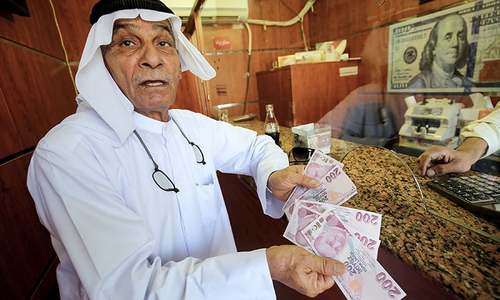
Asian markets tumbled and the Turkish lira dived almost eight per cent on Monday on fears that the economic crisis gripping Turkey could spill over into the global economy.
With investors already on edge over the China-United States (US) trade war, the lira's collapse sparked a sell-off in Europe and New York at the end of last week, with safe-haven assets including the Japanese yen and Swiss franc rallying.
The lira dived to a record low of 7.2362 to the US dollar at one point overnight before recovering slightly after the country's finance minister said Ankara was planning to roll out an “action plan” on Monday in response to the crisis.
That was followed by the central bank saying it was ready to take “all necessary measures” to ensure financial stability, easing reserve requirements for lenders and promising to provide them with liquidity.
“Our institutions will take necessary action from Monday in order to relieve the markets,” Berat Albayrak said, adding that the plan would centre on “the state of our banks and the small and medium size enterprises” most affected by the lira's plunge.
The lira has been hammered this year, having started January at around 3.70 to the dollar according to Bloomberg data, while it is also sharply down against the euro.
However, the European unit was taking a hit against the greenback on worries about the possible impact on some European banks, including Spain's BBVA, Italy's UniCredit and France's BNP Paribas.
Despite the tumult, President Tayyip Erdogan remains in a combative mood, calling the rout a “political, underhand plot” against Turkey.
The crisis has been sparked by a series of issues including a faltering economy — the central bank has defied market calls for rate hikes — and tensions with the US, which has hit Turkey with sanctions over its detention of an American pastor.
Ankara has also hit out at Washington's cooperation with Syrian Kurdish militia in the fight against the militant Islamic State group.
Vulnerabilities
“The decline in the lira is multifaceted, caused not only by a weak external position in terms of current account deficit and inadequate currency reserves but also the challenging political environment which exacerbates the vulnerabilities in the lira,” said Kerry Craig, global market strategist at JP Morgan Asset Management.
“A mid-meeting rate hike and tightening of monetary policy may help to avert the lira's decline, to some extent.”
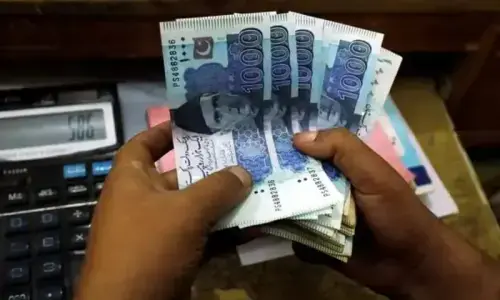
As well as the lira, emerging market and other high-yielding currencies tumbled across the board.
The Russian ruble, already under pressure after the US hit Moscow with sanctions last week, lost two per cent, while the South African rand was battered seven per cent.
South Korea's won and the Australian dollar retreated 0.4 per cent and the Indonesian rupiah lost 0.9 per cent and is at its weakest level since October 2015.
The Indian rupee hit a new low of 69.62, extending a recent sell-off with high crude prices also squeezing the unit as India is a net importer of oil.
The yen, a go-to unit in times of turmoil, rose against the dollar, while the Swiss franc was also higher.
“The dominating theme of this week is likely to be the Turkish situation,” Okasan Online Securities said in a note to clients.
“The 'Turkey shock' from last weekend, triggered by sharp plunges of the lira, has fuelled fears that it may impact financial institutions in Europe,” it said.
On equity markets, Hong Kong shed 1.4 per cent in late trade and Shanghai finished 0.3 per cent lower, while Tokyo dropped two per cent with exporters hurt by the stronger yen.
Sydney fell 0.4 per cent, Singapore was 0.8 per cent lower and Seoul shed 1.5 per cent. There were also sharp losses in Taipei, Manila and Jakarta, which dived 3.3 per cent after Indonesia reported on Friday its biggest current account deficit in about four years.
In early European trade London and Paris each slipped 0.2 per cent, while Frankfurt was 0.6 per cent lower.
The sharp losses come despite the fact Turkey accounts for just one per cent of the world economy, meaning there is little risk to the world economy or even the eurozone.