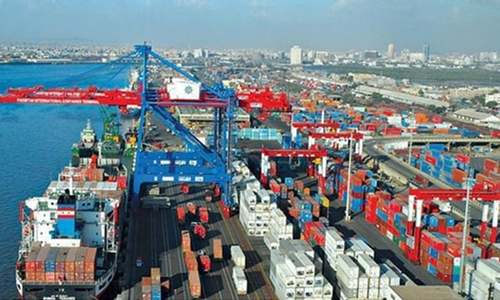
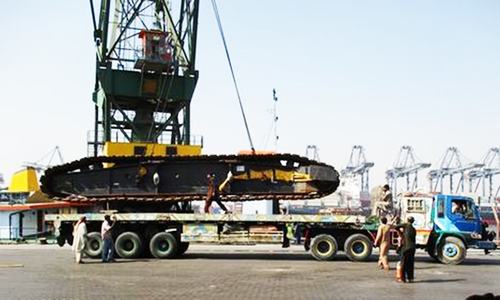
ISLAMABAD: Ahead of the new elected government, the Commerce Division and Customs Department are working on various proposals to curtail the rising import bill of the country, an official told Dawn.
The Commerce Division is working on an exercise to identify certain tariff lines that will be proposed to the incoming government for imposing quantitative restrictions on its imports.
The division is doing the exercise as part of the 100-day plan for the newly elected government.
Under the proposed plan, the ministry — headed by Secretary Younus Dagha — is also suggesting to either restrict imports of certain luxury items or ban them altogether. However, this plan is being discussed by the bureaucracy.
The final nod will be given by the PTI-led government when it forms government next week. It will then be decided whether to opt this proposal or come up with some alternative. However, it is not clear if these measures will reap dividends or not. But the official believes such drastic measures will negatively impact the industrial sector of the country.
At the same time, the division is negotiating preferential agreements with several countries to encourage imports from them while in return seek market access for Pakistani products. No official response was received from the Commerce Division till the filing of this story regarding them.
The import bill reached record $60.86bn in 2017-18 from $52.9bn in the previous year, reflecting an increase of 15 per cent.
Last year, the Commerce Division also took several measures such as proposing regulatory duties as well as qualitative restriction to control the import flows.
Yet the country’s trade deficit reached a historic $37.6bn in 2017-18 from $32.5bn in the previous year.
On the other hand, the Customs Department of Federal Board of Revenue is also working on a proposal to further impose regulatory duties on luxury and non-essential items. This proposal will be discussed with the new government, an official in the bureau told Dawn.
The Customs Department is also a beneficiary of this measure because it helps the department pocket extra revenue.
But a senior official of the department said that apparently the move will help curtail imports. “We are analysing the impact of regulatory duty on import flows as well,” the officer said.
The government imposed regulatory duty on 1,500 tariff lines last year, of which imports of 700 lines dropped in the outgoing fiscal year, said the official. As a result, the customs revenue of Rs13bn dropped from these lines in 2017-18.
The overall growth in imports was 30pc in the early months of last year but slowed down to 19pc following the imposition of regulatory duties, the official said. The dutiable imports grew 13pc, while duty-free items rose 37 times during the outgoing fiscal year.
Last year, the State Bank of Pakistan had also announced 100pc cash margin restrictions on the import of 131 items to discourage import of non-essential items.
Published in Dawn, August 10th, 2018