What we see in Pakistan today has been the case for long. The biggest irony that marks South Asian Muslim upper and middle classes is their wish to build citadels of righteousness and truth with the bricks of falsehood and intrigue. They wish to reform their state structures and social institutions without conceding a fraction of their entitlements accumulated through questionable means and undeserved concessions over generations.
Those subscribing to conservative ideals derive their basis for self-conceit and the defence for political manipulation from divinity. And those who once indulged in socialist politics use the elements of plotting and trickery to shape their practice in the name of the greater public good.
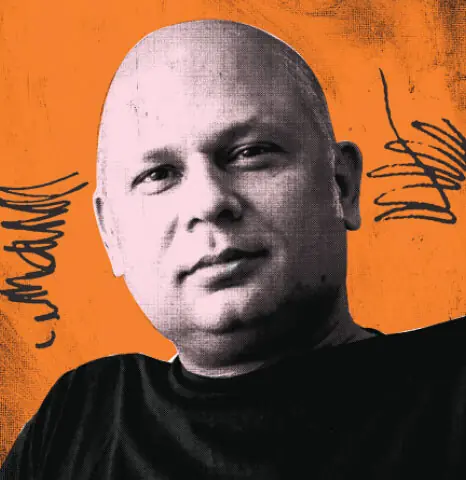
It had to be someone such as Biyyathil Mohyuddin Kutty, more popularly known as B.M. Kutty, to narrate his life story for us to better understand the path our elites and their institutions of power collectively chose for the country. He explores the six and a half decades of the chequered political history of Pakistan. Along with political autobiographies and memoirs such as Sherbaz Khan Mazari’s A Journey to Disillusionment and Dada Amir Haider’s Chains to Lose: Life and Struggles of a Revolutionary, Kutty’s Sixty Years in Self-Exile: No Regrets is essential reading for scholars, journalists, political workers and general readers interested in the subject. The book is also available in an Urdu translation titled Khud Ikhtiarkarda Jilawatani.
Kutty was born into an educated peasant family from Kerala, South India. He enlightens the reader about the plural culture, simple life, natural beauty and political consciousness found in Kerala, particularly the Malabar region. After spending initial years in his native Tirur, his father sent him to college in Madras (now Chennai). Although he claims he has no regrets and is known to have fully integrated himself into the people’s struggles in his chosen homeland in Pakistan, a strong hint of nostalgia is found in his description of his childhood and early youth. After spending time in Madras, instead of going back to Kerala or settling elsewhere in India, he decided to come to Pakistan.
Kutty’s anecdotes from his professional career provide an insight into how corporate Pakistan worked in its initial years. But his work with the trade unions and left-wing political parties, primarily based out of Lahore and Karachi, brought him huge trials and tribulations. He spent a number of years in prison for his views and activism. He convened and organised industrial workers, the peasantry, miners and political activists. After joining movements for labour and democratic rights, there was no looking back for him. Internationally, he contributed to peace and labour movements in South Asia and beyond.
Since the Communist Party of Pakistan was banned in 1954, Kutty has been a part of every effort to remobilise leftist and nationalist political platforms. In the 1980s, he also had the distinction of serving for three years as the joint secretary general of the Movement for Restoration of Democracy (MRD) during martial law. He has also remained closely allied with political rights movements in Balochistan. Before penning his autobiography, he edited In Search of Solutions: An Autobiography of Mir Ghaus Bakhsh Bizenjo.
Kutty has told a gripping tale of how labour, political and national rights movements contributed to political awakening in the country in the face of state hostility, the internal tensions within the groups and parties he worked with, and the character of mainstream political parties he closely interacted with. What lends authenticity to his narration is the absence of any ambition for seeking any leadership position for himself and remaining a worker instead.
In his preface to Kutty’s autobiography, noted lawyer and rights champion Raza Kazim writes: “…by virtue of his [Kutty’s] own political persuasions he has never been a ‘leader’ in Pakistani politics. And as such has had no personal stakes which would have influenced or vitiated his account.” There is no personal stake, but there is a deep personal involvement and one can feel the constant desire for uplifting the downtrodden in anything Kutty writes about.
The writer is a poet and essayist based in Islamabad
Published in Dawn, Books & Authors, August 5th, 2018