0
0

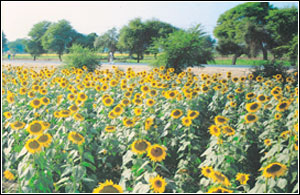 THE sunflower crop is subjected to various mechanical, physiological and biological stresses in all stages of growth and in all environments with reported loss. The unavailability of good quality seed and the import of dwarf varieties, devoid of resistance against diseases, are factors to be looked into.
Weather, toxicants, pollutants, insects, viruses, fungi, nematodes, bacteria and weeds are primary hazards to production. The diseases are injurious in certain areas, in some years and on particular parts.
However, all plant parts are vulnerable to diseases with one or more cropping up on virtually every plant and in all fields. The symptoms are of great concern as these effect the quality and quantity of seed.
Different diseases are responsible for damaging the crops and at times these are negligible while at others these could incur 100 per cent production loss. Alternaria leaf spots or blight is the only one spoiling the crop by 15 to 90 per cent with oil losses of 20 to 30 per cent.
Normally, these do not occur but in humid areas it causes 50-60 per cent loss. The fungus Sclerotinia sclerotiorum is the cause of root, stem and head rot diseases which account for half of the production losses. At other times, more than 75 per cent of the sunflower acreage endures head rot which not only decreases substantial yield but contaminates the soil for many years, as well. Rhizopus head rot is of minor importance but causes severe losses in spring sown crop.
In a recent survey of sunflower, Rhizopus head rot was found to be the most common disease inflicting 100 per cent damage in certain fields. Rust too, reduces yield and oil content, seed size, weight, taste and kernel-to-hull ratios. Late planted fields of susceptible hybrids are generally damaged by the rust. Similar reports are available with reference to other diseases which sometimes are considered minor while in rare cases major.
Although edible oil is one of the basic food requirements but the oilseed crops have secondary importance. Sunflower, soybean, groundnut, sesame and caster belong to Kharif, while canola, rapeseed and mustards, safflower and linseed are Rabi crops. Its per unit area yield is quite low due to few constraints and unawareness among the farmers. Identification and control of diseases is one of the most important components in boosting the production.
Sunflower has gained popularity and acreage among the new oilseed crops introduced. The important features of this crop are short growing period, high yielding potential and wide range of growing seasons like autumn, spring and winter.
It fits well in different cropping patterns with low irrigation water requirements and wide adaptability to soil and moisture conditions. Its seed contains over 40 per cent edible oil and meal free from the toxic compounds. Three irrigations are necessary, first 30-35 days after sowing, second at the start of flowering and the last just after the petals fall. However, farmers depend on the availability of water and at times spring and autumn crops rely on only the first soaking dose.
Integrated disease management:
* Cultivation of disease-resistant or tolerant varieties is safe and economical. Cultivars with upright heads are more susceptible to infection by head rotting fungi.
* Healthy and undamaged quality seeds or treatment with any suitable seed dressing fungicide significantly reduces the incidence of Alternaria seedling blight and other seed and soil borne disease-causing fungi.
* Rotation with non-host crops for 2-3 years is also beneficial.
* Proper tillage operations can minimize the diseases caused by soil borne pathogens.
* Irrigation water and fertilizers must be applied as per requirement of the crop with normal methods and proper dose.
* Collection and burning of diseased plant parts and debris may minimize the risk.
* Foliar fungicides could not be recommended because of their poisonous properties, equally dangerous for all livings.
* Most diseases are caused by the pathogens specific to sunflower. Sclerotinia, however, attacks many crops, and mustard, canola and soybean should not be used in sunflower rotations.