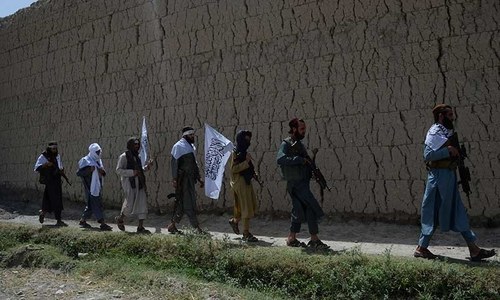
Afghan security forces resumed offensive operations on Saturday after President Ashraf Ghani declared an end to the government's unilateral ceasefire with the Taliban.
Ghani said the ceasefire, which lasted 18 days after it was extended once and overlapped with the Taliban's unilateral three-day truce for Eid, had been “98 per cent successful”.
“The ceasefire is over. The Afghan security and defence forces are allowed to restart their military operations,” Ghani told reporters.
The three days of no fighting were unprecedented in the nearly 17-year conflict and triggered jubilant scenes across the war-weary country.
Taliban fighters and security forces spontaneously celebrated the holiday that caps the holy month of Ramazan, hugging each other and taking selfies.
The militants were also mobbed by relieved civilians, who have borne the brunt of the war, raising hopes of a renewed push for peace talks.
Ghani said the ceasefire had shown that the majority of the insurgents wanted peace and it was the “Taliban's turn to give a positive response”.
“I am ready to extend the ceasefire anytime when the Taliban are ready,” he said at a press conference.
But the sight of its fighters openly mingling with security forces and civilians over Eid appeared to alarm the Taliban's leaders, who on Sunday ordered their men back to their posts.
The Taliban vowed on Tuesday to continue their bloody fight against the government and their foreign backers, brushing aside rising civilian casualties.
The insurgents returned to the battlefield last week after refusing a government request to extend their ceasefire, launching attacks across the country that have seen scores killed or injured.
The renewed violence has poured cold water on hopes the truce would provide a clear path to peace talks, with the Taliban refusing to bow to pressure to lay down their arms until foreign forces withdraw from Afghanistan.
The truces did not extend to the militant Islamic State group, which has a relatively small but potent presence in Afghanistan, and launched two deadly attacks on ceasefire revellers during Eid.