1
1

KARACHI: The trial in the murder case of renowned social worker Perween Rahman has been stalled since the police remain unable to produce witnesses and have also failed to provide them security despite clear directives of the Supreme Court, it emerged on Wednesday.
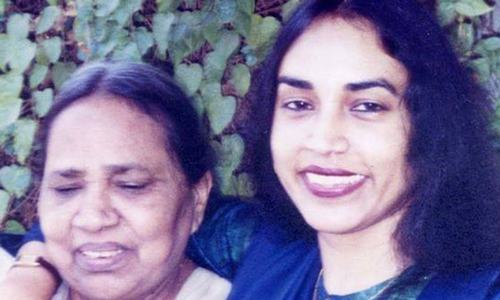
Perween Rahman, head of the Orangi Pilot Project, who devoted her life to the development of the impoverished neighbourhoods across the country, was gunned down near her office in Karachi’s Orangi Town on March 13, 2013.
Judicial sources told Dawn that the antiterrorism court concerned had indicted five accused, including Ayaz Shamzai alias Swati, Mohammad Amjad Hussain Khan, Ahmed Khan alias Ahmed Ali alias Pappu Kashmiri, Mohammad Imran Swati and Mohammad Raheem Swati, on March 29.
Police have failed to provide security to witnesses despite SC orders
They pleaded not guilty and opted to contest. Therefore, the trial court had summoned the prosecution witnesses to record their statements.
However, the sources in the prosecution department said the trial had yet to take a formal start after the lapse of almost three months, as not a single witness of the prosecution had come forward to record their statement.
“There are around 23 prosecution witnesses in the case, but none of them seems willing to come forward to record statements due to security concerns,” advocate Salahuddin Panhwar, the lawyer representing the complainant, told Dawn.
On the last hearing on June 22 the antiterrorism court had once again issued summons to the prosecution witnesses, as all of them were called absent.
Mr Panhwar recalled that the Supreme Court, where certain human rights groups had filed a petition to seek investigation into the social worker’s murder, had in October 2017 directed the Sindh police to provide adequate security to the slain activist’s family as well as witnesses.
The directive came when Rahman’s sister complained that the family was receiving serious threats following arrest of the key suspect, Azam Swati.
Later, the trial court had also directed the then West DIG to provide security to the complainant, witnesses and counsel appearing in the case, but nothing had been done so far, said the complainant’s lawyer.
“The witnesses’ absence can delay the proceedings,” he apprehended.
Officials in the prosecution department said two of the arrested suspects — Ayaz Swati and Amjad — had filed bail application with the Sindh High Court while the third — Mohammad Imran Swati — had moved bail plea in the trial court.
“The absence of the witnesses and all others related to the case might not only delay the trial but also benefit the suspects,” they said, sharing the apprehension of advocate Panhwar.
The investigating officer was not available for comment. However, some of the petitioners Dawn spoke to urged that the trial may be completed without any delays and those involved should be punished according to the law.
The very next day after Ms Rahman was shot dead by unknown motorcyclists, police claimed to have killed a Taliban operative named Qari Bilal. It was further claimed that he was the murderer, resulting in closure of the case.
However, a group of 12 human rights organisations, including the Human Rights Commission of Pakistan, Pakistan Institute of Labour Education and Research, and members of civil society groups, moved the Supreme Court to seek an investigation into the murder.
Therefore, the apex court in April 2014 ordered authorities to conduct a fresh probe into Perween Rahman’s murder after a judicial inquiry, which was conducted on the orders of the apex court, revealed that police officers had manipulated the investigation.
During the trial, the antiterrorism court had released one suspect, Bilal alias Tension, after the police investigating officer filed a report stating that no concrete evidence was found against the suspect to link him with the alleged crime. The IO sought his release under Section 497(2) of the Criminal Procedure Code.
A case was registered under Sections 302 (premeditated murder) and 34 (common intention) of the Pakistan Penal Code at the Pirabad police station.
Later Section 7 of the Anti-Terrorism Act, 1997 was incorporated in the case on a directive of the Supreme Court that also had ordered a judicial inquiry into the case by the then district and sessions judge (West), Ghulam Mustafa Memon.
Published in Dawn, June 28th, 2018