11
11
Asian nations are clamping down on the number of Twenty20 (T20) leagues players can compete in as global cricket chiefs struggle to regulate the format's phenomenal rise.
But with stars like West Indies batsman Chris Gayle and England's Ben Stokes making fortunes in the cash-rich Indian Premier League (IPL), Australia's Big Bash League and other T20 tournaments around the world, players are likely to resist any attempt to impose restrictions, their union says.
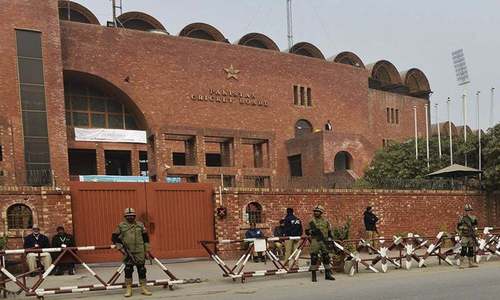
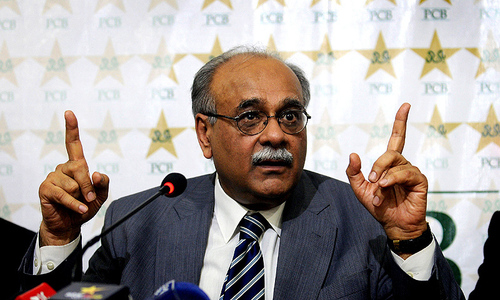
In recent weeks, the Pakistan Cricket Board has told contracted players they can take part in only two T20 leagues a year, one of which must be the Pakistan Super League.
Bangladesh allows its players to compete in only two foreign leagues, and participation in domestic first-class tournaments is also mandatory.
The West Indies suffers most from the multi-billion dollar global T20 circus and wants the International Cricket Council (ICC) to restrict players' mobility and for national boards to get a cut of their T20 earnings.
ICC challenge
There are at least 10 Caribbean stars in this year's IPL, including Dwayne Bravo, who will be one of the key players for Chennai Super Kings in Sunday's final in Mumbai.
Australia and England oppose restrictions however, officials said.
ICC chief executive Dave Richardson said that while T20 is crucial to securing more converts to cricket and any future Olympic bid, it also risks getting out of control.
The council is setting up a panel to formulate international T20 rules that will include the heads of national bodies, the international players' union and specialist lawyers.
“One of the biggest challenges facing the game is caused by the proliferation of domestic T20 leagues,” Richardson said at a recent ICC meeting in Kolkata.
The new leagues “are competing for time in the schedule with international bilateral cricket”, Richardson said, adding that “private entrepreneurs” arranging high-stakes leagues in smaller countries were a growing problem.
The new committee will recommend controls to ensure that T20 leagues are played “only in a way that does not prejudice international cricket and makes sure that we have the best players in international cricket,” said Richardson.
Balance needed
The committee will have to fit T20 leagues into the international calendar, organise player release but also look at “whether there needs to be restrictions on players playing in a certain number of leagues,” said Richardson.
“We are not only talking about restrictions on players but also making sure that any leagues that do take place, the players are properly protected, there are minimum anti-corruption standards, anti-doping, payment of player contracts, all those kind of things.”
Richardson said sanctions may be needed “to make sure that private promoters are not just making money and running away with it.” In January the ICC ordered a corruption investigation into the Ajman All-Stars League in the United Arab Emirates, which had featured several former international players.
Both the Emirates Cricket Board and the ICC had refused to endorse the league.
But the international players' union, FICA, warned that it would not accept “arbitrary” decisions on T20, which players increasingly see as their main format of the game.
“The cricket world is in many ways now like football and playing for your club is now the peak for a lot of players,” said Darren Sammy, who led West Indies to two T20 World Cup triumphs.
FICA executive chairman Tony Irish told AFP that “genuine reform to the structure of the game is needed to create a balance between traditional international cricket and new domestic T20 markets.”
“FICA continues to oppose arbitrary or restrictive regulations imposed on players that are not part of a collectively agreed framework.
“A blanket restriction on the number of events players can play in should not be the mechanism to solve inherent issues with the structure of the game for many reasons including legal ones.”
FICA is expected to take part in the ICC working group. But it said: “It is hoped that the working group will appreciate the critical importance of engagement with players and their collective representatives in order to establish a workable framework. “