VIENNA: The UN nuclear watchdog confirmed on Wednesday Iran is implementing “nuclear-related commitments” under its deal with world powers, a day after US President Donald Trump accused Tehran of lying about its nuclear ambitions.
“As of today, the IAEA can confirm that the nuclear-related commitments are being implemented by Iran,” Yukiya Amano, director-general of the International Atomic Energy Agency (IAEA), said in a statement.
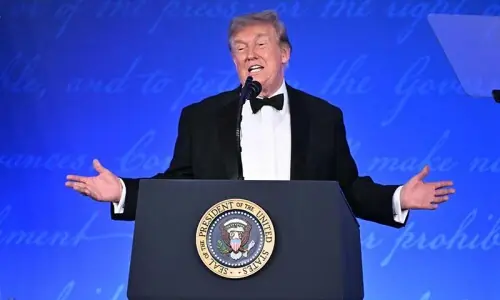
Trump announced on Tuesday that the US would pull out of the 2015 Joint Comprehensive Plan of Action (JCPOA), sparking an international outcry.
Amano reiterated that “Iran is subject to the world’s most robust nuclear verification regime” and that the JCPOA was “a significant verification gain”.
He previously said ditching the JCPOA would be “a great loss for nuclear verification and for multilateralism”. “The IAEA is closely following developments” related to the JCPOA, Amano added.
Despite US criticism that the accord does not go far enough in monitoring Iran’s activities, the IAEA says the JCPOA has given it much wider access to Iran’s nuclear facilities, pointing to the fact that its inspectors now spend 3,000 man days per year on the ground there.
The agency says it has attached some 2,000 tamper-proof seals to nuclear material and equipment, and that it has access to “hundreds of thousands of images captured daily by our sophisticated surveillance cameras”, the number of which has almost doubled since 2013.
Macron, Rouhani to seek ‘continued implementation’
French President Emmanuel Macron and Iran’s Hassan Rouhani agreed on Wednesday during a phone call to work towards “the continued implementation of the nuclear deal” despite the US decision to withdraw from the agreement, the French presidency said.
“The French and Iranian presidents agreed to pursue their joint efforts with all nations involved, with the aim of continued implementation of the nuclear deal and maintaining regional stability,” Macron’s office said in a statement.
US President Donald Trump announced on Tuesday that he was pulling out of the landmark 2015 nuclear accord, calling it “defective at its core”.
It was a stark diplomatic defeat for France, Germany and Britain, which had lobbied hard for Trump to stand by a deal whose terms they say Tehran has largely respected.
But during their call, Macron told Rouhani that France would also seek an expanded accord in a “mutually beneficial framework” covering Iran’s ballistic missile development, its involvement in several crises roiling the Middle East, and the prospects for its nuclear programme once the 2015 accord expires in 2025. Macron’s office said France and Iran’s foreign ministers would meet “without delay” for talks.
Published in Dawn, May 10th, 2018