‘Grow fruits, spices instead of wheat, rice to deal with water scarcity’

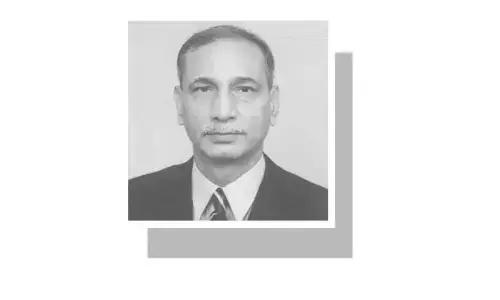
ISLAMABAD: “Countries have developed capacity to store water for three years and more, but we are still sadly standing at the 20-day reserve level due to our heavy reliance on the running rivers for agriculture,” said Former Adviser to the finance ministry Dr Salman Shah.
Addressing a discussion titled, ‘Driving Pakistan’s Water Policy’, organised by Hisaar Foundation on Friday, Mr Shah said that Pakistan has surplus water, but manages it poorly.
He said that water shortage in the country was primarily caused by the absence of a broad-based water management policy.
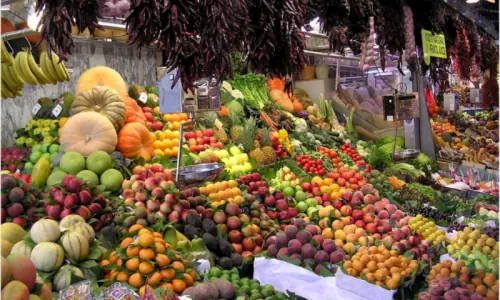
“Pakistan should shift to growing fruits and spices, instead of growing wheat and rice, to manage water and land utilisation,” he added.
Dr Shah said that even industrialised countries had invested timely into their water infrastructure, yet Pakistan has not availed the advantage of its current water position.
“We waste too much water. In case of Punjab, the province has an annual 54 million acre feet (MAF) supply, but its canals show only 30MAF – where does the remaining water goes?”
He said that a nationwide study is required over water supply through the canal systems, wastage, leakage, utilisation and eventually the output.
Dr Shah highlighted that Punjab gives around 4ft per acre to its southern districts, whereas around 1ft per acre to its northern parts. Globally, the standard is 2ft per acre in countries having high agricultural productivity like Australia, South Africa and California.
He said that as cities grow, their demand for water increases too, causing its share for agriculture to decline. “This means that Pakistan needs to modernise its water usage.”
He also suggested that there is a need to shift from food crops to cash crops to boost the economy, as the country can import cheap wheat, rice and corn instead of growing costly produce.
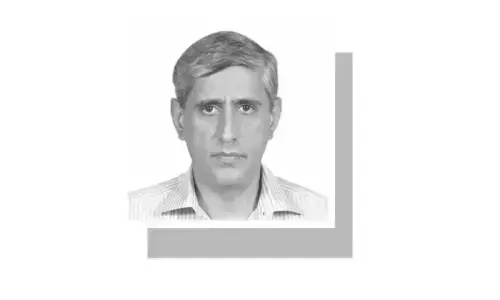
Wapda’s former member Khalid Mohtadullah said that the best way to mitigate the impact of climate change is to enhance water storage capacity as the natural storage in the form of glaciers is at the risk of meltdown.
“Glaciers are melting faster than expected, therefore there is a higher flow of water in the rivers – but this is for a limited period. Besides, snowfall has also declined in many parts,” he said adding, “In both the cases we need to build dams to store water otherwise we are heading for a disaster.”
Hisaar Foundation’s Convener Simi Kamal said that water management is a national issue and our political leadership should take the matter seriously at a war footing.
Published in Dawn, April 8th, 2018