Lights switched off to observe Earth Hour in Karachi

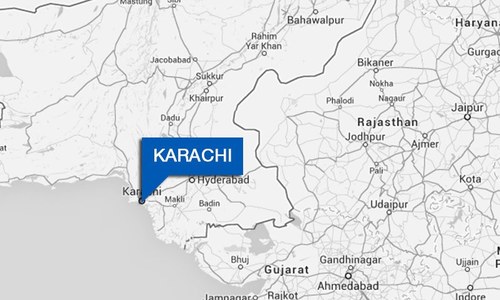
KARACHI: Earth Hour on Saturday was observed in Pakistan from 8.30pm to 9.30pm.
Well-known landmarks all over Pakistan switched off their lights to connect to the biggest movement on the planet for spreading awareness of climate change.
In Karachi, the two biggest landmarks which embraced natural light as opposed to electric lights were the Sindh Assembly building and Frere Hall.
It was rather amazing to see the landmarks drenched in darkness and still not lose their grandness. In fact they looked even more dramatic in natural light. Simultaneously, in Lahore the DCO Office, Wapda House, Wazir Khan Mosque, Hazuri Bagh and in Islamabad the Parliament House, the Supreme Court of Pakistan, Damn-i-Koh, Pak-China Friendship Centre, Shah Faisal Mosque, Convention Centre, etc, also turned off their lights.
Organised annually by the World Wide Fund for Nature (WWF), Earth Hour was celebrated for the first time in 2007 to encourage people, communities and corporate firms to set aside a specific day towards the end of March to turn off all unnecessary lights for one hour.
As a symbol of commitment to the Earth where climate change threatens the future of the planet, the first such lights-out event was held in Sydney, Australia. Since then it has grown to over 7,000 cities across 187 countries. WWF-Pakistan joined in the global movement in 2010.

Pakistan is among the top 10 countries affected by climate change.
There have been earthquakes and floods here, which have already impacted the country’s economy. As always this year, too, WWF-Pakistan representatives visited schools to spread awareness of the environment and climate change and how students could help by becoming environmentally-conscious.
The children were informed how to play their part in reducing the carbon footprint by doing simple things such as switching off unnecessary lights and conserving energy, planting more trees and using less plastic bags.
Published in Dawn, March 25th, 2018