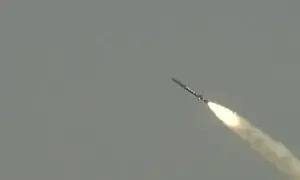
ON Jan 13, 2018, people in Hawaii were shocked to receive text messages warning of an imminent missile attack. After what many said were the most horrifying 38 minutes of their lives, they received a second message that it was a false alert, the result of human error at the emergency operations centre. But in the context of a simmering crisis between the US and North Korea, the possibility of a missile attack seemed real, and with it the potential for nuclear war.
Too often, debates about nuclear weapons revolve around concepts of operationalising nuclear deterrence, escalation ladders and flexible responses. But these debates tend to obscure the fact that nuclear weapons are real and their use is not impossible. A crisis sparked by a false alert, fake news, an inflammatory tweet, a social media gimmick, a computer glitch, a hacked network — any of these could spark conflict that results in nuclear weapons being used.
Ironically, attention drawn to a US-North Korea crisis or other potential flashpoints makes the nuclear establishment in Pakistan fairly comfortable. After all, we are not the focal point of what we often think is the Western media’s negative attention. But does that mean there is no cause for worry about a nuclear war in South Asia?
We must revisit our beliefs regarding a nuclear war.
All is not well between India and Pakistan. In recent times, the Indian air chief has threatened to target Pakistani nuclear assets, while the Indian army chief talked about calling Pakistan’s “nuclear bluff”. The DG ISPR warned of a befitting response. All this on top of the ever-increasing levels of violence along the Line of Control.
These reminders of the fault lines and sabre-rattling between India and Pakistan call for introspection, for thinking through our preparedness to deal with crises, and to gauge our ability to protect citizens from our own follies. We must revisit our fundamental beliefs and unstated assumptions about the possibility of crisis and a war that may turn nuclear.
Advocates of nuclear deterrence believe that nuclear weapons prevent war and therefore their inhumanity in some strange ways serves the cause of human survival. Nuclear proliferation optimists flaunt the deterrence role of nuclear weapons by referring to what John Lewis Gaddis called an era of ‘Long Peace’ — itself a debatable notion for those familiar with the intense arguments between Gaddis and our very own Eqbal Ahmad. Eqbal brought home the brutality of the supposed Cold War and ‘Long Peace’ by looking at it from the perspective of its victims.
However, the nuclear industry and deterrence discourse of the Cold War has made nuclear weapons fetish objects and nuclear deterrence sacrosanct for many here as elsewhere. We are fond of quoting Bernard Brodie’s 1946 observation that, “from now on the chief purpose of military strategy is not to win wars; it is instead to prevent one”. Quite often we treat this as a departure point to teach nuclear deterrence during the Cold War without realising that Brodie’s voice was not reflective of a consensus; it was just one among many voices. In fact, the US and the USSR never thought a nuclear war was impossible and spent considerable effort and money planning to fight one.
And yet, nuclear war didn’t break out. Was it because it looked too real? Was it because it was too deadly and the human mind too sane to blunder into a nuclear inferno? Or was it mere luck, as former US defence secretary Robert McNamara suggested? It is as difficult to answer these questions as it is to determine the precise role of nuclear weapons in preventing war during the Cold War. But it is important to keep thinking about these questions and how they apply to South Asia today. There are no assurances that nuclear weapons won’t be used.
Indeed, the fact that we in Pakistan assume that nuclear deterrence prevents large-scale wars itself may create enough reasons for both India and Pakistan to opt for escalation in a crisis.
Yes, a nuclear war is too dreadful an idea to think about; too inhuman to contemplate. But that doesn’t change the fact that there are wars, and savagery and brutal weapons that have the ability to annihilate human species from the face of this earth. Our inhibition does not change the fact that organisations and states continue to develop the instruments of death and destruction without guilt or remorse and many people in many places endorse those weapons with pride.
In sum it is important to understand that the possibility of escalation in a future crisis in South Asia cannot be precluded only because we know nuclear weapons are too deadly or because others have not fought nuclear wars. It is equally important to resolve conflicts and find ways to reduce and eventually eliminate all weapons of mass destruction in South Asia and elsewhere.
The writer teaches at Quaid-i-Azam University, Islamabad.
Published in Dawn, March 1st, 2018