11
11

Death awaits you in Afghanistan, says refugee Mohammad Wali, insisting he prefers to endure a grim existence in a Pakistani camp than return home and be killed.
Islamabad has increasingly put Afghan refugees in the crosshairs in recent weeks, saying that militants hide in Pakistani camps and calling for refugees to be repatriated as part of a campaign to eliminate extremism.
But in Afghanistan, nearly four decades after the Soviet invasion sent the first refugees flowing over the border, the resurgent Taliban fight on, with civilians repeatedly caught in the carnage.
Days after a spate of deadly attacks killed more than 130 people, Wali, wearing a shabby coat, said a recent call to his family in the Afghan capital was filled with only dire news.
"They told me of terrible attacks and of the bombers blowing them up and nothing else," the fruit seller said.
Pakistan hosts roughly 1.4 million registered Afghan refugees, the UN says. A further 700,000 undocumented are also believed to be living in the country.
Read: What is wrong with repatriating Afghan refugees?
In recent weeks, anti-refugee rhetoric by officials has heated up again, notably as they come under increased US pressure over militant safe havens.
"Pakistan has also been stressing the need of early repatriation of Afghan refugees as their presence in Pakistan helps Afghan terrorists to melt and morph among them," the foreign ministry said, following a suspected US drone strike in the tribal belt last month.
The official pressure coincides with a souring of public opinion toward refugees, with some Pakistanis saying Afghans have overstayed their welcome.
"Enough is enough. We served them for 40 years, shared our houses and treated them as guests," said Peshawar resident Mehmood Khan.
The UN's refugee agency has warned against any forcible or coerced repatriations, insisting they be voluntary.
In late January, Pakistan extended a deadline by 60 days for refugees holding proof of registration cards to leave its territory.
But as security in Afghanistan deteriorates further, refugees at an Islamabad camp said volunteers would be in short supply.
'Nothing left'
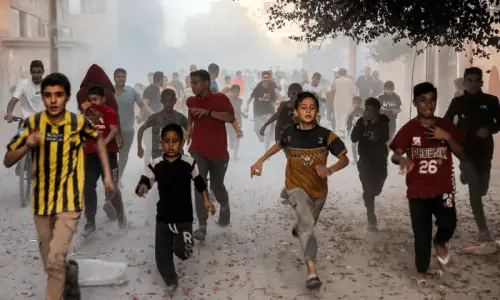
Women carried buckets of water on their heads at the camp on the outskirts of Islamabad as young children played cricket in the dust near mud brick homes that lack electricity and clean water.
But none who spoke to AFP wanted to leave, all citing security and work as day labourers.
"There is nothing left in my homeland [...] only war and fighting," said Hajji Shahzada, 60, who came to Pakistan during the Soviet invasion four decades ago.
In depth: Pakistan's stepchildren
A recent report by the Norwegian Refugee Council found that seven out of 10 Afghans who had returned after living as refugees abroad have been displaced twice, chased from place to place by the insurgency.
The findings should give nations hosting Afghan refugees pause, said NRC secretary general Jan Egeland.
"Now is not the time to deport Afghans [...] It can destabilise the whole region and lead to immeasurable suffering," he said in the report.
Often the refugees end up in major urban centres such as Kabul, competing for scant resources.
Kabul, straining to manage its expanding population and feeble economy, has failed to help them, says Sher Agha, a representative for the refugees in Islamabad.
"Providing jobs and employment is another issue, but at the very least they need shelter," he told AFP.
'Better to live'
The conditions are so bleak that "many" returnees are sneaking back across the porous border and quietly taking up their lives in Pakistan, multiple refugees told AFP.
Abdul Malik was born an Afghan refugee in northwest Pakistan, living there for more than 40 years. But in 2016, he repatriated with his Pakistani wife and children.
They settled in a village near Jalalabad, in eastern Nangarhar province, where the Taliban and the Islamic State group have been waging a turf war.
"It was the most unpleasant experience of my life," Malik, wrapped in a traditional Pashtun shawl, told AFP during an interview in Peshawar.
The water was contaminated, the air was polluted, there were no doctors, no clinics, no employment, nothing but "bad roads and difficult conditions", he said — along with the constant fear of a brutal death at the hands of militants.
He lasted three months before sneaking back into Pakistan — as many other Afghan families who could afford the journey have done.
Wali, who spoke to AFP at the Islamabad camp, said he would rather endure uncertainty in a country that does not want him than return home.
"Better to live here even if we face hunger and thirst," he explains.
"At least we will not die."