4
4

Pakistan handed over 27 individuals suspected of having ties to the Afghan Taliban and Haqqani Network to Afghanistan last year, Foreign Office (FO) spokesman Dr Mohammad Faisal revealed on Tuesday.
In a series of tweets, the FO spokesman said Pakistan is continuing to push any suspected Afghan Taliban and Haqqani elements with a view to "prevent them from using our soil for any terrorist activity in Afghanistan".
The suspected militants were handed over to Afghanistan in November 2017, he said.
The revelation comes as Afghanistan reels from a series of assaults by Afghan Taliban and militant Islamic State (IS) extremists that have put security and intelligence failures in the spotlight.
Faisal also mentioned that Pakistan has lost "75,000 civilians and 6,000 soldiers to the scourge of terrorism and suffered $123 billion in economic losses".
"We have one of the highest officer-to-soldier casualty rate[s] globally," he wrote.
Separately, in an interview with Radio Pakistan's Current Affairs Channel, the FO spokesman said the Quadrilateral Coordination Group comprising Pakistan, Afghanistan, the United States and China is the most appropriate forum to promote the Afghan peace process.
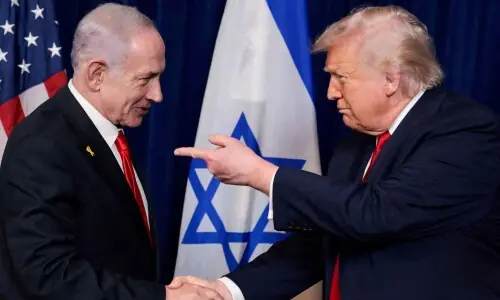
See: Trump says 'no' to Taliban talks after wave of attacks in Afghanistan
Peace could not be achieved in Afghanistan in the past 17 years despite the use of all sorts of weapons and ammunition, Faisal said, adding that the Afghan conflict can only be addressed through dialogue as military strategy has failed to prove fruitful.
Kabul attacked
Three times in the past 10 days Taliban and IS militants penetrated heavily fortified areas in Kabul to carry out attacks that have killed and wounded hundreds of people, including foreigners.
Read: Taliban and IS create perfect storm of bloodshed in Kabul
In the latest assault on Monday, an IS-claimed attack on an army battalion killed at least 11 soldiers. On January 20 the Taliban launched the first of two massive attacks in Kabul: an hours-long assault on a luxury hotel in which at least 25 people were killed, including many foreigners.
One week later an ambulance laden with explosives detonated in a crowded street, killing more than 100 people and wounding hundreds more in one of the deadliest bomb blasts in Kabul in recent years.
In August, Trump concluded a months-long review of America's strategy to win the brutal war in Afghanistan, now entering its 17th year.
The strategy called for an increase in the tempo and intensity of strikes against the Taliban, as well as pressure from Pakistan to deny the group safe haven.