4
4
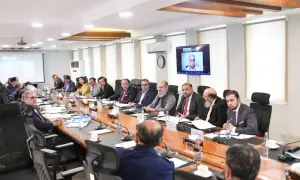
NO one in government seems to quite know how to deal with the Jamaatud Dawa, or even its charity wing, the Falah-i-Insaniyat Foundation — despite knowing they must be reined in, given prevailing international currents. The government’s inability to build a prosecutable case against JuD chief Hafiz Saeed, and its unsuccessful attempts to have his detention extended, has made the task more difficult. However, perhaps another attempt is now being made through the SECP. Following a high-level meeting chaired by the prime minister, the corporate sector regulator has announced that registered companies are prohibited from donating cash to entities and individuals included in the consolidated list issued by the UN Security Council’s sanctions committee. The announcement is not novel in itself: the government had already prescribed a penalty of up to Rs10 million for those violating the sanctions regime. However, while the UNSC’s relevant resolutions are primarily concerned with the militant Islamic State group, Al Qaeda etc, the SECP’s latest measure is reportedly specific to the FIF, which — like the JuD — is listed as an affiliate of the banned Lashkar-e-Taiba. Whether it will achieve anything at all is a moot point.
The genesis of the FIF — or JuD for that matter — has long been an open secret. Faced with the conundrum of how to accommodate this large body of militants, especially given the official policy of cracking down against extremism in all its manifestations, the state — or certain elements of it — has adopted the path of mainstreaming them. Certainly there are examples globally of former militant outfits laying down arms and even evolving into political entities: the decommissioning of the Irish Republican Army is one such instance. However, for the sake of credibility such groups must expressly abjure violence, as did the IRA. Whether we like it or not, international perceptions do matter, and the world is not convinced that FIF’s charitable activities do not mask a more sinister agenda. The kid glove treatment meted out to them has not helped Pakistan’s case. Predictably enough, the JuD in its response to the SECP announcement has dredged up the bogey of this country kowtowing to Western powers. The government should not allow JuD to obfuscate the matter; instead, it must clearly explain why it has taken this step and what has necessitated this action now. Measures against militancy may coincide with Western expectations, but they are ultimately in Pakistan’s own interest.
Published in Dawn, January 4th, 2018