5
5

“Palestinians have the right to East Jerusalem as their capital," said Saudi Arabia's King Salman on Wednesday during his annual speech outlining his government’s priorities for the coming year, Saudi Gazette reported.
“The Kingdom has called for a political solution to resolve regional crises, foremost of which is the Palestinian issue and the restoration of the Palestinian people’s legitimate rights, including the right to establish their independent state with east Jerusalem as its capital,” the king was quoted as saying.
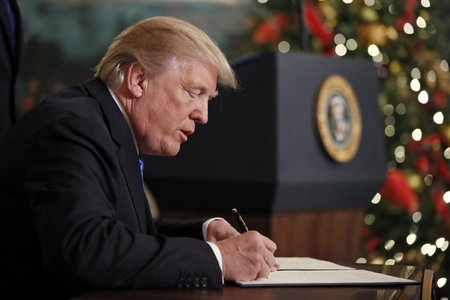
He, however, did not attend the emergency summit of the Organisation of Islamic Cooperation (OIC) convened by Turkish President Recep Tayyip Erdogan in Istanbul on the same day, which aimed to seek a tough response to the recognition by US President Donald Trump of Jerusalem as Israel’s capital.
Islamic leaders declared “East Jerusalem as the capital of the State of Palestine” at the summit and invited “all countries to recognise the State of Palestine and East Jerusalem as its occupied capital”. They also declared President Trump’s decision “null and void legally” and “a deliberate undermining of all peace efforts” that would give impetus to “extremism and terrorism”.
The summit, however, fell short of agreeing on concrete sanctions against Israel or US.
Iranian President Hassan Rouhani, Jordanian King Abdullah II, Pakistan Prime Minister Shahid Khaqan Abbasi and Lebanese President Michel Aoun were among the heads of state present, as well as the emirs of Qatar and Kuwait and presidents of Afghanistan and Indonesia.
King Salman and his son Crown Prince Mohammed bin Salman, who has reportedly been in close contact with Trump over the Middle East, were noticeably absent. Instead, Riyadh sent a senior foreign ministry official.
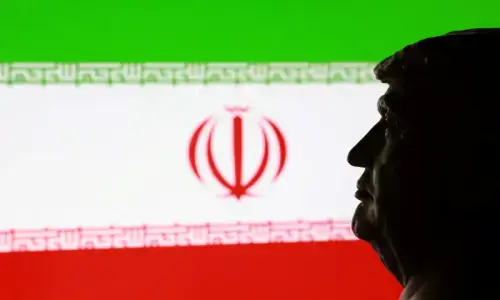
“Some countries in our region are in cooperation with the United States and the Zionist regime and determining the fate of Palestine,” seethed Rouhani — whose country does not recognise Israel and has dire relations with Saudi Arabia — during the summit on Wednesday.
'Zero tolerance for corruption'
King Salman, inaugurating the second year of the 7th session of the Shoura Council, also spoke about the recent Saudi purge against corruption, spearheaded by the crown prince.
“We have decided with God’s help to confront corruption with justice and decisiveness so that our country can enjoy the renaissance and development that every citizen aspires for,” King Salman said, adding that a higher committee for public corruption issues headed by the Crown Prince was formed for this reason.
Last month, Saudi Arabia arrested princes, including a prominent billionaire, and dozens of current and former ministers in a sweeping crackdown.
According to Saudi Gazette, King Salman in his speech focused on economic issues said that the country was pushing ahead with its Vision 2030 economic reforms.
“For achieving the vision’s objectives, some government agencies have been restructured and a number of decisions have been taken to serve the interests of society, strengthen the state’s security, combat corruption, and increase the participation of male and female citizens in the national development,” he said.
The king, however, emphasised in his speech that Saudi Arabia would not contradict the principles of its faith as it “moves forward on the path of development and modernization.”
“There is no place among us for an extremist who sees moderation as deviation or who would exploit our benevolent faith to achieve his goals,” he added.
Saudi Arabia's powerful crown prince in October had vowed to restore “moderate, open” Islam in the Kingdom.
“We are returning to what we were before, a country of moderate Islam that is open to all religions and to the world,” he had said at an economic forum in Riyadh. “We will not spend the next 30 years of our lives dealing with destructive ideas. We will destroy them today."
The crown prince's statement was seen as a direct attack by a top official on the country's influential conservative religious establishment.