Delhi can learn from other megacities to clear its toxic smog


 2
2


KUALA LUMPUR: Delhi must adopt anti-pollution steps taken by other megacities like Beijing and Mexico City if the Indian metropolis is to get serious about tackling its annual smog crisis, experts say.
A toxic cloud covered India’s capital, New Delhi, and surrounding areas this month, causing respiratory problems among residents and leading to school closures, flight cancellations and the declaration of a public health emergency.
The causes of the problem include the poor quality of diesel used to generate electricity and to power the vehicles clogging the streets, dust and smoke thrown out by a thriving construction industry, and biomass and kerosene used by the poor for heating and cooking.
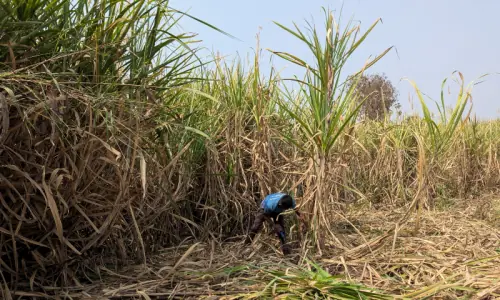
Stubble-burning on farmland around the city, described by local officials this month as a “gas chamber”, is also cited by experts as a major cause.
“At the moment, Delhi is the most polluted city in the world in terms of air quality,” said Sarah Colenbrander, a researcher at the London-based International Institute for Environment and Development.
Similar to other megacities, poorer residents are often worst-hit by air pollution, as they are most likely to live along busy highways or near power plants.
They also tend to take jobs that are done outside, like street vending or labouring, providing little relief from the toxic fumes.
Making a start
Delhi residents breathe in three times as many fine particles that cause the greatest risk to health than the people of Beijing, another city notorious for high pollution levels that has begun to make strides in tackling its air problems.
The Chinese capital — which is home to about 22 million people compared to Delhi’s 18m — still suffers from chronic pollution and congestion.
But Beijing officials have created an air pollution action plan ushering in strict traffic curbs and regulations on the city’s construction industry from November until March.
By limiting building work across and around Greater Beijing, dust levels have fallen, said Mukesh Khare, professor of environmental engineering at the Indian Institute of Technology (IIT).
Delhi officials also took action to stop construction when pollution levels rose this month, but they acted after the smog arrived not before, as Beijing now does.
“The structure of Beijing city, though much larger than Delhi, is similar,” said Khare, an expert in urban air pollution. “Beijing has very successfully tackled this issue. It is doable for India as well.”
Beijing leaders and city administrators are, however, free to take action against pollution spikes without having to worry about political consequences or possible court action, he noted.
For every $1 spent on improving air quality in cities, $30 is returned to an economy, said Khare.
Despite this, Indian authorities have failed to get the message across to the poor about the health risks and causes of air pollution, he said.
Stop the gridlock
Lists of the world’s most polluted cities are usually dominated by Indian and Chinese cities. But 25 years ago, Mexico City would always rank near the top.
Over the past decade, the high-altitude city — which still suffers from pollution and congestion — has tried different and unique ways to improve life for the 21m people in its metropolitan region.
Efforts to boost mobility in Mexico City really took off after the roll-out of a plan to connect the airport with the city centre — a journey of about 6.5 kilometres that used to take more than three hours — by expanding its bus rapid transit system, said Jemilah Magnusson of the Institute for Transportation and Development Policy in New York.
Fixing that problem showed people the relative ease and potential benefits of enlarging the city’s limited public transport network, she said.
Mexico City has also created more bicycle lanes alongside a popular bike-sharing scheme.
And it has introduced groundbreaking parking reforms, including restricting the amount of parking buildings can provide, whereas before they were required to offer a minimum.
This measure aims to discourage the use of cars and free up more space for housing, making it cheaper.
‘Things will get worse’
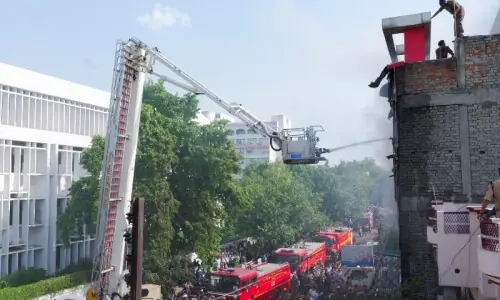
As Delhi’s air quality deteriorated this month, authorities tried using fire trucks to spray water to keep dust and other air particles down, halting construction work, increasing car parking charges, and implementing an emergency odd-even licence plate policy to limit the use of private vehicles.
The effect was limited, but experts say there are other short-term measures that could be taken by Delhi officials to stop the smog in future.
As in most Indian cities, the vast majority of residents do not drive cars, so improving the bus and pedestrian infrastructure would help, alongside implementing a bike-sharing scheme, introducing a permanent odd-even system, parking reforms and basic street redesign, experts said.
Connecting low-income households to the electricity grid would also ease pollution problems, coupled with providing cleaner energy alternatives like solar lamps.
Longer term, a national environment agency should be established with the power to make quick decisions on pollution control and to punish states for inaction, said IIT’s Khare.
Delhi would also benefit from large-scale investment in a mass transit system and the creation of an air pollution action plan using forecasts provided by the Indian meteorological department to prevent smog, experts said.
Meanwhile, the central government should enforce existing anti-pollution regulations and standards, and push for a shift to more energy-efficient and cleaner vehicles, they said.
“If we don’t have a good action plan, things will get worse because Delhi is increasingly a growing city [and] our economy is getting better and better,” said Khare.
Thomson Reuters Foundation
Published in Dawn, November 30th, 2017