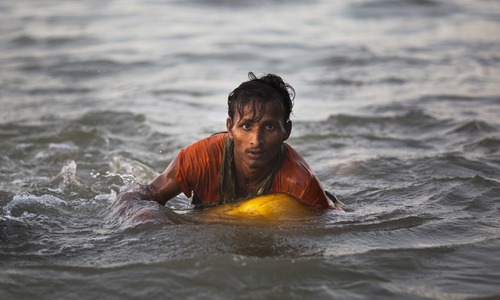
Myanmar and Bangladesh signed a deal on Thursday paving the way for the possible repatriation of Rohingya Muslims who have fled violence in Rakhine state, officials said, as global pressure mounts over the refugee crisis.
More than 620,000 Rohingya have poured into Bangladesh since August, running from a Myanmar military crackdown that Washington said this week clearly constitutes “ethnic cleansing”.
After weeks of tussling over the terms of repatriation, the two sides inked a deal in Myanmar's capital Naypyidaw on Thursday following talks between Myanmar's civilian leader Aung San Suu Kyi and Dhaka's Foreign Minister A.H. Mahmood Ali.
“Myanmar and Bangladesh signed a memorandum of understanding today,” Myint Kyaing, the permanent secretary of Myanmar's Ministry of Labour, Immigration and Population, confirmed to AFP.
He said he was unauthorised to provide more details.
The Myanmar government spokesman, Zaw Htay, also tweeted that an “agreement on repatriation” had been signed, though he could not be reached by phone for further comment.
In brief remarks to the press, Bangladesh's Foreign Minister Ali said: “This is a primary step. (They) will take back (Rohingya). Now we have to start working.”
But the scope of the repatriation ─ such as how many Rohingya will be allowed back ─ and the timeline remain unclear.
Rights groups have raised concerns about the process, including where the minority will be resettled after hundreds of their villages were razed, and how their safety will be ensured in a country where anti-Muslim sentiment is surging.
The signing of the deal came ahead of a highly-anticipated visit to both nations from Pope Francis, who has been outspoken about his sympathy for the plight of the Rohingya.
The stateless Rohingya have been the target of communal violence and vicious anti-Muslim sentiment in mainly Buddhist Myanmar for years.
They have also been systematically oppressed by the government, which stripped the minority of citizenship and severely restricts their movement, as well as their access to basic services.
The latest unrest erupted after Rohingya rebels attacked police posts on August 25.
The army backlash rained violence across northern Rakhine, with refugees recounting nightmarish scenes of soldiers and Buddhist mobs slaughtering villagers and burning down entire communities.
The military denies all allegations but has restricted access to the conflict zone.
Suu Kyi's government has blocked visas for a UN-fact finding mission tasked with probing accusations of military abuse.