UN pleads for end of Yemen blockade or ‘untold thousands’ will die

GENEVA: The heads of three UN agencies urged the Saudi-led military coalition on Thursday to lift its blockade on Yemen, warning that “untold thousands” would die if it stayed in place.
The coalition closed all air, land and sea access to Yemen on Nov 6 following the interception of a missile fired towards the Saudi capital, saying it had to stem the flow of arms from Iran to its Houthi opponents in the war in Yemen.
Yemen already has 7 million people on the brink of famine, but without the reopening of all ports that number could grow by 3.2 million, the heads of the World Food Programme, Unicef and the World Health Organisation said in a joint statement.
“The cost of this blockade is being measured in the number of lives that are lost,” the statement from David Beasley, Antony Lake and Tedros Adhanom Ghebreyesus said.
“Together, we issue another urgent appeal for the coalition to permit entry of lifesaving supplies to Yemen in response to what is now the worst humanitarian crisis in the world.” Saudi Arabia has since said that aid can go through “liberated ports” but not Houthi-controlled Hodeidah, the conduit for the vast bulk of imports into Yemen. For months, the UN has warned that the closure of Hodeidah would dramatically escalate the crisis.
As of Wednesday, 29 vessels, with 300,000 tonnes of food and 192,000 tonnes of fuel, had been blocked, while UN ships carrying $10 million of health and nutrition supplies and 25,000 tonnes of wheat were waiting to berth at Hodeidah, according to another UN statement.
“Without fuel, the vaccine cold chain, water supply systems and waste water treatment plants will stop functioning. And without food and safe water, the threat of famine grows by the day,” the UN agency heads said.
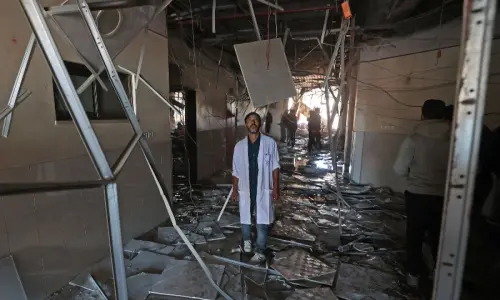
At least one million children are at risk if a fast-spreading diphtheria outbreak is not stopped in its tracks, and the lives of 400,000 pregnant women and their babies are under threat because of the lack of medicines.
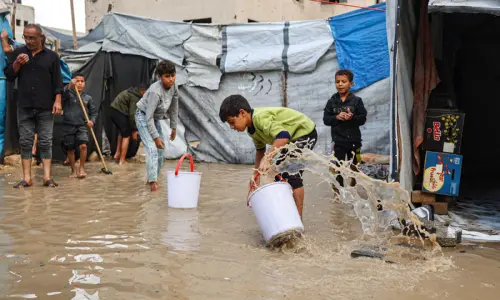
There is also the risk of a renewed flare-up in cholera, which was on the wane after the most explosive outbreak ever recorded — with over 900,000 cases and 2,200 deaths in the past six months.
The number of new cholera cases has declined for the last eight weeks, Sherin Varkey, Unicef deputy representative in Yemen, said in a telephone interview from Sanaa on Thursday.
The government-controlled port of Aden has re-opened and Sanaa airport is operating for commercial flights, however this is inadequate as “needs are so huge”, he said.
“There is a fuel crisis. Some estimates say fuel will only last in the country for 20 days because of the blockade and challenges of getting fuel into the country,” Varkey said. Unicef is helping provide clean water to 6 million Yemenis by ensuring fuel is delivered to water pumping stations in cities, he said.
“Our worry is with the fuel shortage this could affect and even we assume reverse the declining trend (in cholera),” he said.
Published in Dawn, November 17th, 2017