US, Pakistan stay engaged to defuse tensions

WASHINGTON: The United States and Pakistan are sending two key visitors — Secretary of State Rex Tillerson and Interior Minister Ahsan Iqbal — to each other’s capitals, as efforts to mend their troubled relations continue.
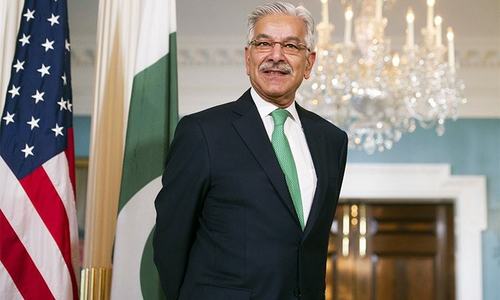
The Pakistani interior minister arrives in Washington on Oct 11, a week after a three-day visit by Foreign Minister Khawaja Asif, whose candid remarks earned him both praise and criticism and strongly conveyed the message that US pressure to force a change in Islamabad is not working.
Secretary Tillerson plans to arrive in Islamabad late this month and he will be followed by Secretary of Defence Jim Mattis early next month.
Mr Mattis told a Congressional panel in Washington earlier this week that two US delegations — including assistant secretaries and national security staff — would visit Islamabad soon for talks on how to re-engage Pakistan in US efforts to win the Afghan war. And these visits will be followed by visits by himself and Secretary Tillerson, he told the House Armed Services Committee.
US defence secretary “thinks we will be successful,” but warns his country has “enormously powerful options” if talks fail
“I would like to think we will be successful,” but that the United States “has an enormously powerful number of options” if the talks fail, Mr Mattis said.
The talks for salvaging US-Pakistan partnership from a possible collapse began in New York late last month, when Prime Minister Shahid Khaqan Abbasi met US Vice President Mike Pence on the sidelines of a session of the United Nations General Assembly.
After the talks, both sides expressed the desire to continue the normalisation process, leading to Mr Asif’s visit to Washington, which concluded on Thursday without giving any indication what it achieved.
Addressing a Washington-based think tank — the US Institute of Peace (USIP) — on the last day of his visit, Mr Asif said his meeting with Secretary Tillerson on Wednesday was “very good” but he did not have similar feelings about his second meeting, with US National Security Adviser H.R. McMaster, whom he met at the White House early Thursday.
US-Pakistan relations, already tense since 2011, strained further on Aug 21, when President Trump announced his new Afghan strategy, accusing Pakistan of allowing terrorist safe havens on its soil.
He also threatened Pakistan with economic and military sanctions if it does not change its policies and promised a greater role for India in Afghanistan, ignoring Islamabad’s security concerns.
Reports in US media on Washington’s strategy for normalising relations with Pakistan suggest that while Mr Tillerson would go with a soft, diplomatic message, Secretary Mattis would explain to Pakistanis that continuing its current policies could have adverse consequences.
At recent congressional hearings, Mr Mattis said the US was willing to give Pakistan “one more chance” but if it fails, Washington could take punitive measures, such as sanctions, expanding drone strikes and de-listing Pakistan as a major non-Nato ally.
“They’ll find themselves diplomatically isolated, they’ll find themselves economically in increasing trouble as countries that are damaged by this terrorism coming out of there say enough is enough and take steps,” said Mr Mattis while explaining to a Congressional panel how Pakistan can be persuaded to change its strategy.
The Pakistani foreign minister’s remarks at the USIP, however, made it obvious that Washington’s tough talk is not having desired result.
He rejected Washington’s accusation that Pakistan allows terrorist safe havens on its soil as “hollow allegations.” “That is not the way you talk to 70-year-old friends,” Mr Asif said bitterly. “When someone tells us it’s the last chance, we do not accept that. Last chance, first chance, second chance, not acceptable to us. We want to be treated with respect and dignity. We do not want anything else.”
Diplomatic observers in Washington say tough remarks from both sides reflect their frustration with the lack of progress in normalising bilateral relations.
They also warn that Washington may find it difficult to convert its tough talk into punitive actions, as such measures could force Pakistan closer to China and Russia.
The observers also point out that Pakistan remains vital for the United States as a route for sending supplies to Afghanistan.
Published in Dawn, October 8th, 2017