3
3


SULAIMANIYAH: Ex-Iraqi president and Kurdish leader Jalal Talabani died on Tuesday in Germany, officials in his party said.
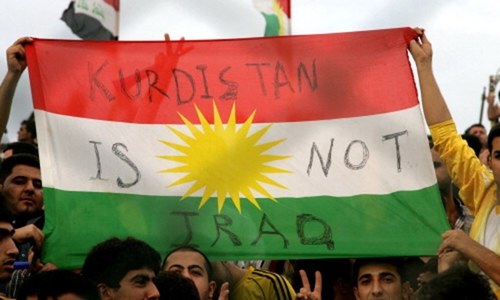
Talabani, 83, was Iraq’s president from 2005 to 2014 and a key figure in Iraqi Kurdistan, where voters last week overwhelmingly backed independence in a disputed referendum.
“Our leader died in Germany,” an official with Talabani’s Patriotic Union of Kurdistan (PUK) said.
A family member said Talabani’s health had taken a turn for the worse and he been transported to Germany, along with his wife and two children, before the referendum.
Iraqi Kurdish lawmaker Zana Said paid tribute to Talabani as “the only president whose death saddens Arabs, Kurds and all other ethnicities”.
“We pray to God that his death will help to bring back good relations between the brothers of Iraq.” Talabani’s death, following a decades-old struggle for Kurdish statehood, came after Iraq’s Kurds voted 92.7 per cent in favour of independence in the September 25 referendum.
The vote, rejected by Baghdad as illegal, has put deep strain on ties between the Kurds and central Iraqi authorities, who have cut off international flights to the region and threatened further action.
Talabani was an avuncular politician and a skilled negotiator, who spent years building bridges between the country’s divided factions, despite his efforts for Kurdish independence. Born in 1933 in the mountain village of Kalkan, he studied law at Baghdad University and did a stint in the army before joining the Kurdistan Democratic Party (KDP) of Mullah Mustafa Barzani, father of current Kurdistan regional president Massud Barzani.
Talabani took to the hills in a first uprising against the Iraqi government in 1961 but famously fell out with Barzani, who sued for peace with Baghdad, and joined a KDP splinter faction in 1964.
Eleven years later, he established the Patriotic Union of Kurdistan (PUK) after Barzani’s forces, abandoned by their Iranian, US and Israeli allies, were routed by Saddam Hussein’s army. He became president in April 2005 after the first post-Saddam election in Iraq and continued in the post until 2014, when he was replaced by the current president, Fuad Masum. Iraq’s head of state plays a largely ceremonial role and is elected by members of parliament.
In August 2008, the married father of two underwent successful heart surgery in the United States, then in 2012 he was flown to Germany after suffering a stroke, casting doubt over his ability to ever return to Iraq. He did go back in July 2014, with Iraq in crisis after the militant Islamic State group had taken control of swathes of the country, and was replaced by Masum following a parliamentary election.
Published in Dawn, October 4th, 2017