ISLAMABAD: A parliamentary committee was told on Thursday that the government had decided to wind up the Pakistan Textile City even though more than Rs2.5 billion had already been invested in the initiative.
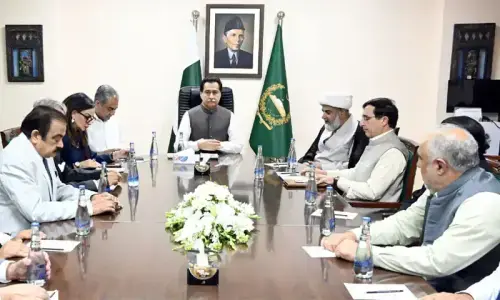
“The company faces financial problems and its liabilities have swollen to nearly Rs5 billion during the last decade. The board of governors has decided to wind up the Textile City,” Kazim Hussain, Director General of Planning and Development, Port Qasim Authority, told the Senate committee on ports and shipping.
Mr Hussain, who is also a member of the Textile City’s board of governors, said a general body meeting of investors and shareholders would be held soon. If 75 per cent of the investors voted for winding up the project, it would be closed down, Mr Hussain said.
“The government has ordered the disposal of all assets of the company and the land transferred to the Port Qasim Authority, which leased 1,250 acres for the Textile City. The PQA shall be responsible for settling all liabilities of the company out of its own resources since it will have beneficial use of the land,” Mr Hussain told the committee members.
The committee was informed that the city was established in May 2004 in order to encourage the setting up of special textile export processing zones. Mr Hussain said the company was set up to provide the textile sector with a sound infrastructure.
According to the official, the government owned 56 per cent shares while the Sindh government 16 per cent.
“Although Rs2.5 billion has already been injected into the infrastructure, no progress could be made due to unavailability of water, gas and electricity. The issue of these basic utilities could not be settled despite our best efforts. The company’s accounts have been blocked by the National Bank due to non-payment of loans,” said Mr Hussain. The company has been suffering losses of Rs800,000 every day.
Mr Hussain told the meeting that the NBP had now approached the High Court to recover its dues and the matter was pending in court.
However, the committee believed that the company, a project of the federal government, should be revived.
“We need the textile industry to grow. The federal government and the Sindh government should come up with a strategy to settle liabilities. Huge investments have already been made, including two solar and wind power generation plants,” said Senator Taj Haider.
He believed that once the company became operational, it would employ more than 32,000 people directly and indirectly.
Senator Nehal Hashmi was pessimistic about the project. “Over the last ten years, nothing has been done on the ground. There is no gas, no water and no electricity because nobody ever took interest,” said Mr Hashmi.
The chairman of the committee, Senator Muhammad Ali Khan Saif of the Muttahida Qaumi Movement, said the committee had made recommendations for breathing a new life into the project, calling for sending the suggestions to the prime minister.
Published in Dawn, August 4th, 2017