Iran rules out halt to missile tests as tension with US rises

TEHRAN: A defiant Iran vowed on Saturday to press ahead with its missile programme and condemned new US sanctions, as tensions rise after the West hardened its tone against the Islamic republic.
In the latest incident, Tehran and Washington accused each other’s naval forces of provocative manoeuvres in the Gulf that culminated in a US helicopter firing warning flares.
The US Navy said it had reacted to unresponsive vessels belonging to the Revolutionary Guards closing in on American ships at high speed, a charge denied by Iran which described the American move as unprovoked.
“At 4 pm (1130 GMT) on Friday, the supercarrier USS Nimitz and its accompanying warship, while being monitored by the Guards’ frigates, flew a helicopter near the Resalat oil and gas platform and approached the force’s ships,” the Iranian paramilitary force said.
“The Americans in a provocative and unprofessional move, sent a warning message to the frigates and fired flares,” it said. The Guards “ignored the unconventional move by the US ships and continued their mission”.
The US Navy said its ships were on a routine patrol when an American helicopter “observed several Islamic Revolutionary Guard Corps naval vessels approaching US naval forces at a high rate of speed”.
“US naval forces attempted to establish communications, with no response from the Iranian vessels. Shortly thereafter, at a safe distance, the US helicopter deployed flares, after which the Iranian vessels halted their approach,” it said.
The latest incident came after a US Navy ship fired warning shots at a Guards boat in similar circumstances on Tuesday, with each side blaming the other. There have been a string of close encounters between US ships and Iranian vessels in the Gulf in recent months.
‘Unacceptable’ sanctions
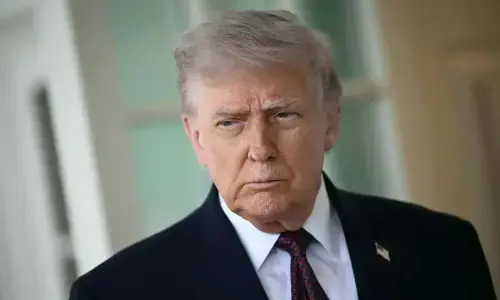
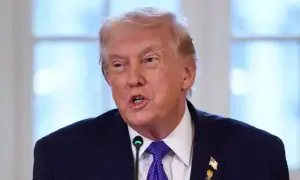
On the political front, Iranian foreign ministry spokesman Bahram Ghasemi said Tehran condemned new US sanctions against its missile programme, which US President Donald Trump is set to sign into law, and vowed to press on.
“We will continue with full power our missile programme,” he said. “We consider the action by the US as hostile, reprehensible and unacceptable, and it’s ultimately an effort to weaken the nuclear deal.”
Ghasemi was referring to the 2015 agreement between Iran and US-led world powers that lifted some sanctions on Tehran in return for curbs on its nuclear programme.
“The military and missile fields... are our domestic policies and others have no right to intervene or comment on them,” Ghasemi said.
The sanctions bill, which also targets Russia and North Korea, was passed by the US Senate on Thursday, two days after being approved by the House of Representatives.
Separately on Friday, Washington imposed new sanctions targeting Iran’s missile programme, one day after Tehran tested a satellite-launch rocket.
Iranian state television broadcast footage of the launch from the Imam Khomeini space centre in the eastern province of Semnan.
The launch vehicle was capable of propelling a satellite weighing 250 kilos into orbit at an altitude of 500 kilometres, it said.
‘Destabilising’ action
In a joint statement, Britain, France, Germany and the US condemned Tehran’s “destabilising” action, saying the test violated UN Security Council Resolution 2231 that endorsed the nuclear deal.
“We call on Iran not to conduct any further ballistic missile launches and related activities,” they said.
Resolution 2231 called on Iran not to test ballistic missiles capable of carrying a nuclear warhead, and an arms embargo has remained in place.
The United States has had no diplomatic ties with the Iran since 1980, and Trump has halted the direct contacts initiated by his predecessor Barack Obama.
Tensions have mounted between Washington and Tehran since Trump took office six months ago vowing to be the best friend of Israel.
At UN headquarters in New York on Friday, US envoy Nikki Haley expressed mistrust of Iran.
“Iran’s widespread support for terrorists tells us we can’t trust them. Iran’s breaking its obligation on missile testing tells us we can’t trust them. Yesterday’s launch proves that yet again,” she said.
Despite his electoral promise to tear apart what he once called “the worst deal ever”, Trump has so far respected the nuclear agreement.
Published in Dawn, July 30th, 2017