0
0
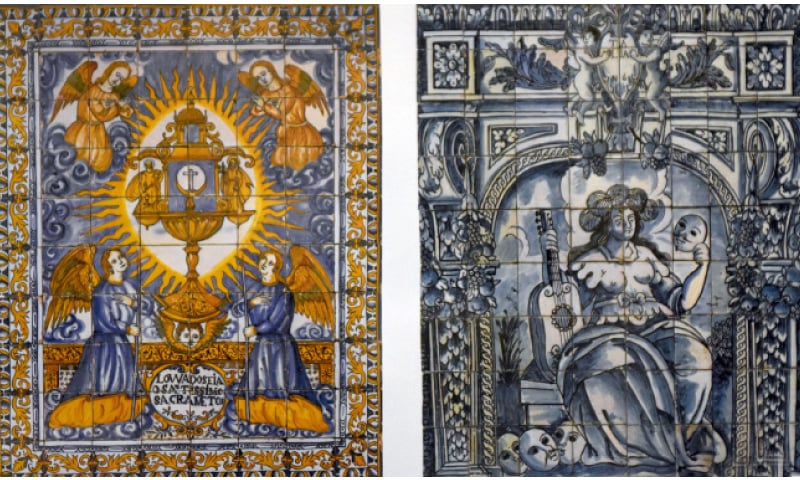

ISLAMABAD: An exhibition of images featuring the Portuguese ceramic tile work known as Azulejo opened at the Satrang gallery on Tuesday.
Titled ‘Art of Azulejo in Portugal’, the event was hosted by the Embassy of Portugal and aimed to build bridges between people and countries.
Azulejo art was influenced by Arab culture and is now considered one of the most expressive forms of art in Portugal, and a great Portuguese contribution to global culture.
“I hope this exhibition will serve as an invitation for people of all ages to [learn] about the fascinating history behind Azulejo art from Portugal,” gallery director Asma Khan said.
The exhibition showcased images and posters of Azulejo found in and on churches, palaces, homes and restaurants that depicted Christian history and other historical events. Azulejo work was not only used as an art form, but also to control temperature in homes.
Visitors to the exhibition learned that the term Azulejo is derived from the Arabic word az-zulayj, which means polished stone.
The Moors brought the term to the Iberian Peninsula, but despite their long presence their influence on early Portuguese Azulejos was introduced from Spain in the 15th century.
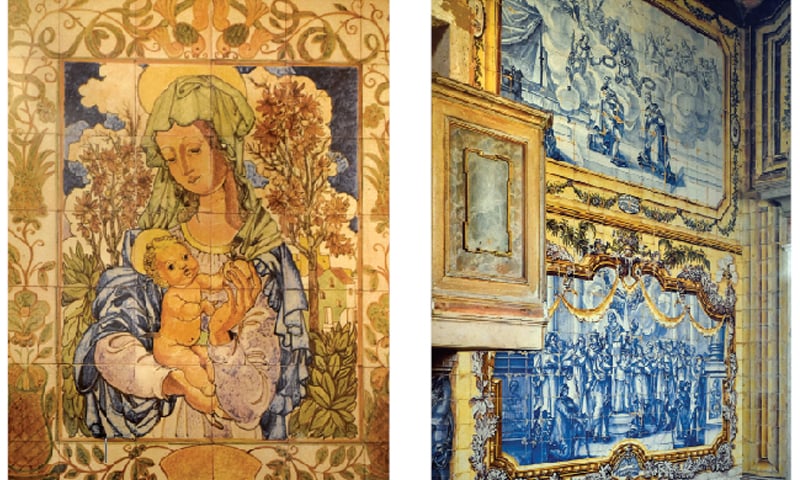
Tile work of this kind has also travelled to other countries, such as Spain, Italy, Holland, Turkey, Iran and Morocco, but Azulejo occupies an important place in the panorama of Portuguese art. Guests at the exhibition were also informed that Azulejos have been made form around five centuries
without interruption, and are the determining element of Portuguese architecture.
“From all the European countries, Portugal is the one where the glazed tile, or Azulejo, showed the greatest development as well as the most original and functional utilisation.
For in no other country as in Portugal did the tiles play such a complex part in transforming the closed character of the architectonic space,” said Portuguese Ambassador Joao Paulo Sabido Costa.
He told guests that the art form has been influenced by many other forms of art, other cultures and civilisations, which defines its character and uniqueness.
It said Azulejo has the remarkable characteristic of absorbing other elements without losing its own identity or personality.
“That could be also a definition of Portuguese culture and its tradition: openness and uniqueness. Therefore, it is this aspect of Portugal that I would invite you to appreciate in today’s exhibition,” Mr Costa added.
Visitors also learned that over the centuries, the art form has spread across all the regions Portugal has had historical contact with.
Artistic influences from South America, Africa and Asia were absorbed by the art form, making it a kind of globalised art.
Today, Azulejos are a dominant feature in every Portuguese city, and can be stopped in villages, in public buildings, private homes, on street signs and even public benches.
Published in Dawn, May 3rd, 2017