“I’m 53 years old. The older I get the less sure I am about things I was sure about when I was 25 years old. I believed stocks for the long run was an unquestioned truth. I believed our economy was based on free market capitalism. I believed stock prices were based upon profits and cash flows. I believed a home was a place to live — not an investment. I believed the Catholic Church was run by good men doing good things. I believed journalists and the media were watchdogs working on behalf of the public. I believed our military was protecting our interests. I believed politicians legislated on behalf of the people. ….. Boy, was I dumbass” — from The Burning Platform blog post titled ‘What the hell is going on’.
I FIND that barring the Catholic Church comment, and ignoring the comment about the military for personal health reasons, I, and perhaps the majority belonging to my generation can very well relate to what is being said.
Curiously, however, the blogger is talking about America, a country which has a high literacy rate and has enjoyed genuine democracy for umpteen years. Accordingly, in my case, I am also now less sure that a democratic government is of the people, by the people, for the people.
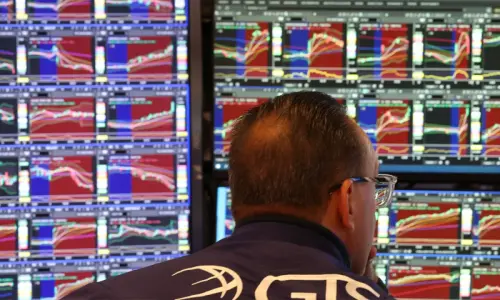
Around 25 years ago, we did believe that stock prices were based upon profits and cash flows of the underlying companies, and that stocks were for the long run. Today, the realisation that Keynes got it right has sunk in, it is a casino. Truly an index dependent upon the wisdom of the crowds, acquired through unsolicited stealthily conveyed ‘tips’, cannot be a barometer for anything, let alone the economy.
Logically, if the stock market had anything to do with the real economy, at dizzying heights of 50,000, there should have been a related positive impact on per capita income. Frankly, I am less sure whether there would be any impact on the common man if the market was shut down.
Free market capitalism has not delivered all that it promised.
About 25 years ago, our economy was not based on free market capitalism but we had at that time decided to opt for Reganomics and Thatcherism. Over the years, we privatised, reduced tariffs facilitating free trade, deregulated foreign currency, enforced international copyrights and opened up almost all sectors for foreign investment.
Simultaneously, we reduced taxes on corporations and wealth pursuant to a complex theory which promised to raise all boats.
Admittedly, a particular segment benefited from all these free-market initiatives, which is why they, the upper-middle class, ferociously defends these initiatives; and the rich did get richer too in the process.
Overall, however, free market capitalism has not delivered all that it promised. Income inequality has increased exponentially, trade deficit has increased alarmingly, agriculture remains the primary driver of the economy, the debt trap is becoming unmanageable if it already isn’t, and let’s not even talk about load-shedding. Today, I am less sure that free market capitalism is the knight in shining armour it was portrayed to be.
Less than two decades ago probably, journalism in the strictest sense of the word was non-existent in Pakistan; for my money, if journalists and media are watchdogs working on behalf of the public, it still is non-existent. Notwithstanding that freedom of speech is rather overrated, in Pakistan, and perhaps the world over, calling a spade a spade is not a walk in the park. The powerful can go to any extent to keep the truth clouded. Truly, after a decade or so of free press, I am less sure whether media has any purpose beyond providing evening entertainment.
I am not less sure about the statement that politicians legislate on behalf of the people, even the thought is ab initio completely unbelievable. Legislation of any kind has forever failed to increase investment in education, improve healthcare, provide justice and create sufficient honourable employment for the ever-increasing populace of Pakistan.
The largest city, and by far the biggest revenue earner for the government, is fast becoming a garbage heap and the majority of the city’s inhabitants struggle for access to clean drinking water. Forget Pakistan, curiously the one politician who promised to tax the rich and provide free college education, could not even get through the primaries in America. I am completely sure that the system is stacked against the public.
Faced with these uncertainties, I am less sure that the economic and political systems we follow lead to the Promised Land. Sadly, in hot pursuit of the roadrunner we don’t even realise that the cliff is fast approaching; for now, I can only hope that I am wrong, albeit less sure!
The writer is a chartered accountant based in Islamabad.
Twitter: @LeAccountant
Published in Dawn, April 13th, 2017