4
4


When it comes to bird farming for meat, the product that comes to mind quickest is chicken. However, another bird, although alien to the local environment, is fast becoming popular for farming: the ostrich.
Unlike other parts of the country where ostriches are considered wild birds, in Punjab they have been declared a part of livestock and can be raised by farmers and citizens without need for a licence.
The Punjab Assembly amended the Punjab Animals Slaughter Control (Amendment) Act 2012 to approve commercial farming in the province.
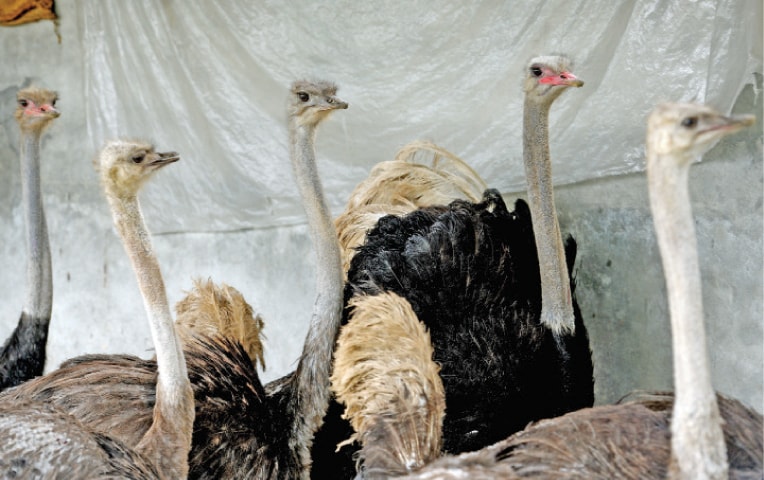
The provincial government also provides a Rs10,000 subsidy per ostrich to farmers and as of 2017, had registered over 10,000 ostriches in the province.
In 2013, a hatchery opened at the Pir Mehr Ali Shah Arid Agriculture University Rawalpindi (PMAS-AAUR) for research and to train farmers. The university helped farmers in Rawat, Chakwal and Jhelum set up ostrich farms and provided them technical assistance, consultancy services and medication to ensure safe investment in ostrich farming.
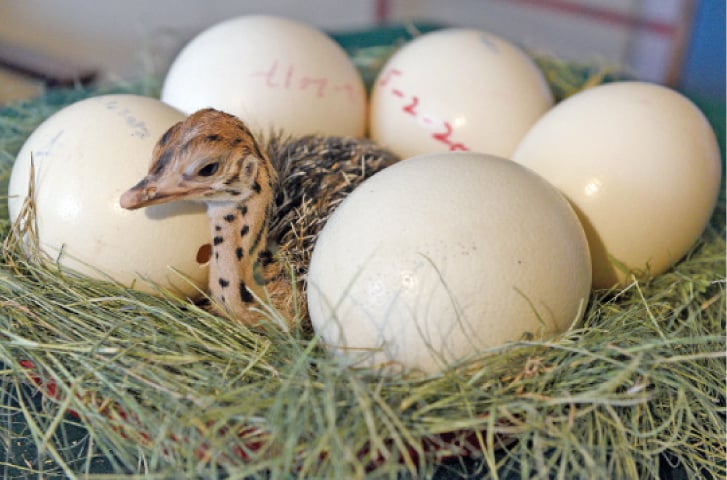
Ostriches are large, flightless desert birds that can tolerate a wide range of temperatures.
Commercial ostrich farming is amongst the world’s fastest growing meat businesses, and provides the global market with meat, hide, eggs, feathers and other products.
Historically, ostrich eggs were used as construction material, while the egg shells were painted and used in lamps. Ostrich feathers were used in fashion while the hide was used for shoes and bags.

The process of hatching ostrich eggs is a technical one. After a large egg is collected, it is kept at normal temperatures for seven days before being moved to an incubator for 45 to 47 days at 36 degrees Celsius.
Dr Nasir Mukhtar, the head of the poultry sciences department at PMAS-AAUR, said ostriches are a source of healthy meat. “Its feathers and skin are sold for a good price, and help farmers earn enough money to keep the birds,” he said.
He said a single bird can provide 45 kilograms of meat, while an omelette made from one egg can feed more than 25 people. Dr Mukhtar added that ostrich meat is a healthier alternative to chicken and fish.

The university’s vice chancellor, Prof Dr Rai Niaz Ahmad, explained that the hatchery was established for future research.
“Ostrich meat is protein rich, low-fat and will end the meat shortage in the future,” he added.
Dr Ahmad said Pakistan’s land and climate are suitable for ostrich farming, and this is an opportune time for Pakistan to capture its share in the international market by rearing ostrich commercially and launching ostrich products locally and abroad. He said ostrich farming was a real solution to overcoming the meat shortage and could help the country earn foreign exchange.
Published in Dawn, April 9th, 2017