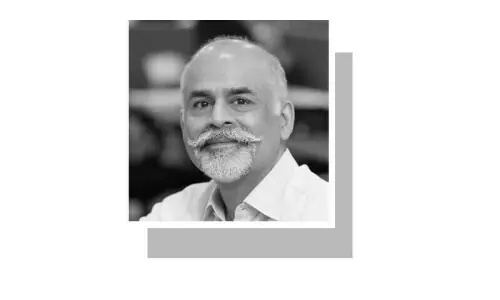
ISLAMABAD: Interior Minister Chaudhry Nisar Ali Khan has warned the international community against mistrust and blame-game, which he said would only strengthen non-state actors and peace saboteurs.
Intervention of the international community in longstanding regional issues only when it suited them or for some short-term goals never yielded positive results, he said.
It was necessary for regional powers and the international community to join hands for peace, stability and development, the interior minister said while advising them to shake off Islamophobia.
“I feel humiliated when my religion is targeted and equated with terrorism,” he said, adding that in fact 1.2 billion Muslims were the worst sufferers and victims of terrorism.
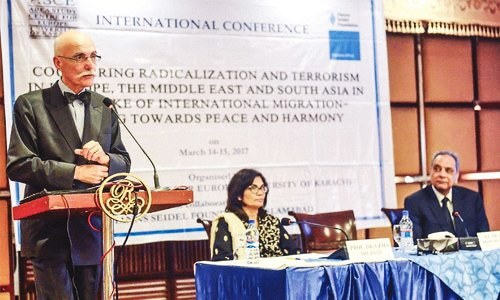
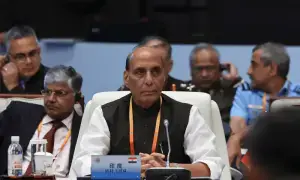
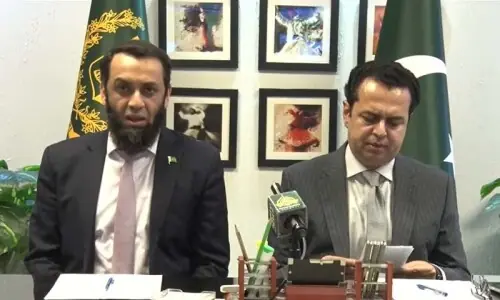
Chairing the closing session of a two-day Pak-UK International Seminar on ‘Sharing Experiences in Stabilisation and Peace Efforts’ at the National Defence University on Wednesday, he asked the international community to make a distinction between terrorism and freedom movements.
Pakistan, he said, had paid heavily for securing peace: “Our sacrifices manifest our commitment to peace, but except for a few friendly countries, the international community remains insensitive to our issues and threats we face both inside and on borders”.
Pakistan had been facing the brunt of regional security discrepancies for the last many decades, he said. “We have single-handedly faced post-conflict situation of rival ideologies and the fight against terrorism.”
Pakistan remained resilient despite paying huge economic and human cost in dealing with the war against terrorism, Chaudhry Nisar said.
Global security was a multi-dimensional and multi-faceted issue due to the complexities of internal and external factors, he said: “One cannot have peace while fanning unrest in a neighbouring country or spilling blood of people demanding their inalienable rights.” Similarly, playing as a tool into others’ hands is also counter-productive to the promotion of regional peace and stability.
“Unfortunately, some countries blame Pakistan for everything even for their own weaknesses,” he said while explaining that at present regional dimension of terrorism embodied complex dynamics and complicated networking systems which required comprehensive and smart solutions. It was necessary to link together national and regional approaches to counter the menace. Only collective efforts were needed as unprecedented international efforts to militarily subdue terrorism could not yield lasting solutions.
To end frequent bomb blasts and terrorist activities, he said, the government first tried the dialogue option and then launched the full-scale military offensive to eliminate terrorists. He said the country achieved a great success in containing terrorists and their facilitators after the launch of Zarb-i-Azb and Raddul Fasaad operations while the graph of terrorism too, had drastically come down as compared to international trends.
Military power was a short-term strategy while complementing the administrative structure not only catered to socio-economic needs but also checked and countered the tendencies towards extremism, he said while seeking greater cooperation and collaboration at international level with mutual sharing of expertise and knowledge.
He observed that “either we stay mired in a situation of mistrust and hostility, or make efforts to resolving disputes and differences through sustained dialogue and learn from our experiences”.
He congratulated the participants and hoped that the deliberations would contribute to developing clear understanding of issues and greater cooperation among all stakeholders for lasting peace and stability.
Published in Dawn, March 16th, 2017