ISLAMABAD: Describing elimination of terrorism and extremism as a “policy imperative” for national security, the political and military leadership on Monday agreed on pacing up the implementation of the National Action Plan (NAP), considered as linchpin of the antiterror strategy, but one that has floundered.
“It was reiterated unanimously that elimination of extremism and terrorism are policy imperatives for Pakistan’s security,” said a press statement issued after a closed-door national security meeting presided over by Prime Minister Nawaz Sharif.
It was the second civil-military huddle in 10 days for looking at what ails the counterterrorism fight and reviewing progress on the recently launched Operation Raddul Fasaad. The military, meanwhile, during this period had its internal review of the situation at last week’s corps commanders’ conference.
The contents of the statement looked to be a point-to-point response to some of the issues publicly stated by the military after the corps commanders’ meeting, which mainly included problems with NAP’s implementation, Pak-Afghan border regulation and legal reforms.
Steps to make antiterrorism laws ‘more effective’ discussed
PM Sharif directed that NAP’s pace should be expedited, the statement said, adding that the participants agreed to “further energise efforts on implementation of the National Action Plan and ensure better implementation of NAP by federal/provincial governments”.
The mention of federal and provincial governments was a tacit admission by the political leadership that they needed to do a better job for implementing the strategy agreed a little over two years ago in the aftermath of the Army Public School tragedy.
The shortcomings in NAP have regularly been pointed out by the military, and civil-military sessions in the past have always come up with a similar resolve, but there has been little change in the progress trajectory.
The concrete steps that might have been agreed at Monday’s meeting were not immediately disclosed. It may be recalled that the actions decided at the last meeting were disclosed by the army in its press statement.
There was also a discussion on antiterrorism laws with a view to making them “more effective”.
Legal reforms were one of the areas agreed at the last meeting and emphasised by the commanders’ meeting.
The government’s failure to reform the criminal justice system has paved the way for granting another extension to military courts for trial of terrorism suspects. A bill in this regard was tabled in the National Assembly on March 10.
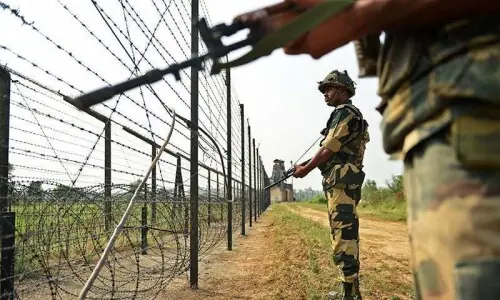
Moreover, steps for “better management of Pak-Afghan border were also reviewed in detail”.
Phased fencing of the Pak-Afghan border and repatriation of Afghan refugees were agreed at the last session. The fencing activity is yet to start, but the border crossings have remained closed since last month’s bombing at the shrine of Lal Shahbaz Qalandar in Sehwan, Sindh, except for a temporary two-day opening for the return of stranded passengers.
“Enemies of peace and development will never be allowed to disrupt the attainment of peace and security across the country,” the meeting resolved, in a reference to the apprehensions of security agencies that hostile agencies of India and Afghanistan were behind terrorism in the country.
Attendance
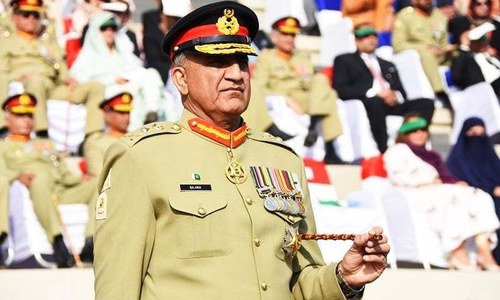
The government seems to have settled with the shorter list of participants. The meeting was attended by Interior Minister Chaudhry Nisar Ali Khan, Finance Minister Ishaq Dar, Chief of the Army Staff Gen Qamar Javed Bajwa, Adviser on Foreign Affairs Sartaj Aziz, National Security Adviser retired Lt Gen Nasser Khan Janjua, ISI Director General Lt Gen Naveed Mukhtar and DGMO Maj Gen Sahir Shamshad Mirza.
Punjab Chief Minister Shahbaz Sharif was also present.
The military side, however, had an expanded presence with ISPR chief Maj Gen Asif Ghafoor and MI Director General Maj Gen Asim also joining the meeting.
These sessions earlier used to be participated by PM’s Special Assistant on Foreign Affairs Tariq Fatemi and the foreign secretary. The new format took effect this month as the investigation into a news leak neared completion.
Sources said some of the actions in view of the investigation were to be discussed at the meeting, but nothing was stated in the statement.
The corps commanders meeting had reminded about the pending Dawn leaks issue.
Gen Bajwa later travelled to Peshawar for attending a provincial apex committee meeting there.
Published in Dawn, March 14th, 2017