Once again the military leadership has called for a quickening of the pace of implementation of the National Action Plan, but will the demand, even if the sentiment is shared by the civilian leadership, finally lead to the desired results?
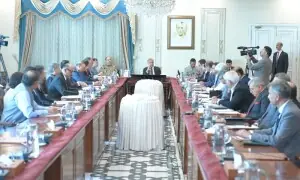
The problems are several and exist on both sides of the civil-military divide. Consider the public demand by the military, a week after a closed-door, high-level summit with the civilian leadership presided over by Prime Minister Nawaz Sharif.
While that meeting resulted in a bland statement by the Prime Minister’s Office claiming that the fight against militancy and extremism would be pursued aggressively, the ISPR press release after the corps’ commanders’ conference on Thursday made clear that one side believes it is doing more than the other.
The military view is not new, nor entirely inaccurate, but it does raise the question whether such public interventions, interpreted by many as a rebuke, are efficacious. If the war against militancy is to be waged together, as it must, by all elements of the state, there must be an emphasis on trust-building and cooperation.
There is also the problem of specifying and narrowing the actions envisaged under NAP. Instead of championing specific actions, the tendency is to broaden them when they face predictable resistance from quarters opposed to the full implementation of NAP.
The demand by the military for the government to pursue “madressah/education” reforms is a case in point. Overall curricula reform, a matter largely in the domain of the provinces, is important, but the public schooling system is not generally considered an incubator for extremists and militants. The problem is more prevalent in the madressah system and some madressah networks in particular. Tackling extremism while wary of being attacked by the very elements propagating it is a non-starter.
Finally, there is the issue of whether the military leadership inadvertently gives the political leadership further reason for inaction.
The revival of military courts, clearly at the urging of the military leadership, will once again postpone the regular criminal justice reforms that are so desperately needed. Admittedly, the political leadership had demonstrated no keenness on criminal justice reforms, but the dismantling of military courts after the 21st Amendment could eventually have created the kind of pressure necessary for a strengthening of the regular anti-terrorism judicial system.
Instead, the political class is once against being shepherded towards populist measures that will surely erode belief in the supremacy and irreversibility of the democratic process itself.
To be sure, the civilian leadership suffers from indecision and uncertainty of its own making. Few statements by the senior civilian leadership at the centre or in the provinces suggest a real willingness to take ownership of the fight against militancy. But there ought to be no alternative to slowly but progressively helping the civilians take charge.
Published in Dawn, March 11th, 2017