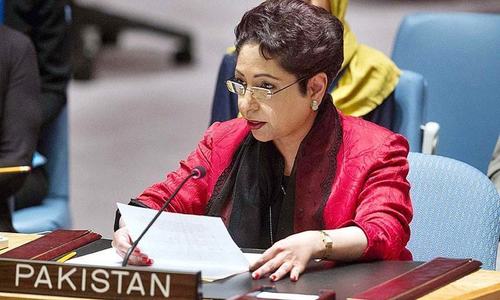
Pakistan's Ambassador to the United Nations Maleeha Lodhi on Tuesday rejected the attempts of states seeking permanent UN Security Council membership, saying it is "inconceivable" that any institution does not value "principles of representation and accountability" through periodic elections.
Lodhi was referring to Group of Four (G4) members ─ India, Brazil, Germany and Japan ─ that have been demanding permanent membership of the 15-member body for the past 20 years.
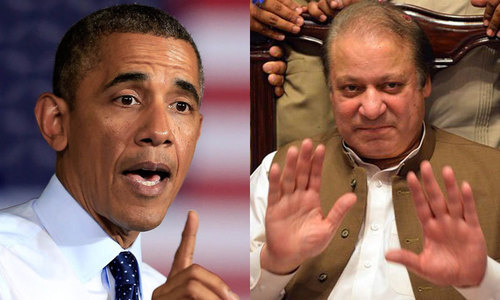
Read more: Pakistan will not accept India as UNSC permanent member: Nawaz
"In the 21st century, it is inconceivable to establish or run an institution ─ national or international ─ which does not embrace the fundamental principles of representation and accountability with periodic elections and fixed term and rotation," Lodhi said in her remarks during the Intergovernmental Negotiations (IGN) process aimed at expanding the Security Council and making it more representative.
"But here we are gridlocked in reforming the Security Council because some among us want a status that defies the basic norms of democratic representation and accountability," the Pakistani envoy said without mentioning names, asking the G4 to be flexible in their demand for permanent seats.
Despite general agreement on expanding membership in the council as part of the UN reform process, member states remain sharply divided over the details.
Pakistan, a leader in the Uniting for Consensus (UfC) group, stands for forming a new category of members ─ not permanent members ─ who can stay in the group with a limited but longer duration and have a possibility to get re-elected once.
But the G4 have been campaigning for expanding the Council by 10 seats, with six additional permanent and four non-permanent members.
Lodhi said there was no disagreement over the demand that the Council should "reflect the realities of the 21st century" to enhance its legitimacy.
"But then some use this disingenuously as an argument to further their self-proclaimed candidacies for permanent seats based on contentious criteria for qualification," the ambassador added.
"Their claim however does not stand the test of accuracy because many states compete with them and even surpass them in all such criteria," the Pakistani envoy said, adding that the criteria they lay out for permanent seats was exactly the same as provided in the UN Charter for the non-permanent members.
"So, if the criteria is the same, why the difference in character and responsibility?" Lodhi asked.
The UfC, she said, has twice revised its proposal in "a genuine spirit of compromise" to find a solution that works for all.
"Had there been flexibility in the unjustified demand for permanent seats, many member states would already have played a positive role in the Security Council," the ambassador added.
Lodhi said Africa's demand for permanent seats was different from the individual pursuit by a few countries because it was a demand put forth via a consensus on behalf of a region.
"Perhaps African countries have suffered the most by the deadlock created by those harbouring a false sense of entitlement," she said.
"We believe the African demand can best be addressed in a just, equitable and pragmatic manner through the compromise solution offered by the UfC," the Pakistani envoy added.
The IGN process opened Monday and will continue on Tuesday with ambassadors of Tunisia and Romania co-facilitating the moot together with the president of the General Assembly.