0
0


Australia
Australia has one of the largest market economies with a GDP of $1.24tr as of 2015. Its per-capita GDP is higher than that of the UK, Germany, and France in terms of purchasing power parity. In recent years, however, it has been bedeviled by a rising number of its children living in poverty.
According to the latest report by the Australian Council of Social Service, almost one in five Australian children is living in poverty, which means that more than 0.7m Australian children live below the poverty line, despite more than 25 years of economic growth.
The economy is dominated by its service sector: 68pc of GDP. The mining sector represents 7pc of GDP. 60pc of the economy is dependent on household consumption.
Australia has experienced 25 years without recession, but there are risks ahead. Commodity market developments, particularly those linked to the Chinese economy, remain an important source of uncertainty and risk.
Australia is currently a net importer of oil and petroleum products and households and businesses are benefiting from lower fuel prices. A sustained drop in oil prices, however, could affect the price of LNG exports in coming months.
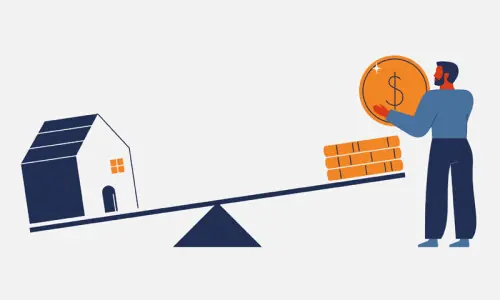
Australia’s housing market remains a risk, as acceleration in price adjustment would weaken consumption demand and construction activity. Any sudden shift in house prices downwards could weaken consumption demand and construction activity.
House prices and household debt ratios have risen further in the low-interest environment post global financial crisis, up from already high pre-crisis levels.
Although Australian interest rates are unlikely to increase sharply in 2017, the major banks have started to increase fixed interest rates anticipating higher future rates. Caution is needed as 2017 is expected be a period of considerable uncertainty for both the property and the share markets.
To avoid housing market blowout, the OECD has asked the Reserve Bank of Australia (RBA) to prepare the nation for official interest rate increases in 2017. But Australia faces a significant underemployment problem and extremely weak wages growth.
As such, the current economic performance is unlikely to support higher interest rates next year. Financial market betting suggests the RBA’s official cash rate will remain at a record low of 1.5pc through to September 2017.
A growing number of economists are predicting hikes thereafter. However, some still expect the reserve bank to cut the cash rate in 2017 to 1pc.
The economy is in the doldrums, with the latest official data revealing its worst quarterly performance since the global financial crisis. For the first time since 2011, the Australian economy shrunk in the September quarter by 0.5pc — the largest since the final quarter of 2008.
The contraction saw the YoY growth rate tumbling sharply to 1.8pc from a solid growth of 2.8pc in December 2015 that was lifted to a strong 3pc in March and 3.3pc in June.
According to the mid-point forecast of the RBA, the economy is expected to grow at 3pc in 2017. The IMF expects the economy to stage a recovery, rising above 3pc over the next two years.
According to the Australian Bureau of Statistics, the shrinking of Australia’s GDP by 0.5pc in the September-quarter is the fourth such decline in 25 years.
A group of analysts suggest that weak September-quarter GDP partly looks like payback for stronger than expected GDP growth over the year to the June quarter of 3.1pc.
Many think GDP will be positive in the fourth quarter. However right now, Australia faces a significant challenge to meet its long-term growth rates. Most economists have warned that evidence of a stalling economy should be taken as a wake-up call for financial markets and policymakers.
A coordinated fiscal and monetary policy response would be needed if large downside risks were to materialise. Efforts to strengthen financial sector resilience must continue.

New Zealand
THE export-driven competitive economy of New Zealand is the 53rd-largest in the world in terms of nominal GDP and 69th-largest on the purchasing power parity (PPP) basis. Its exports account for about 30pc of GDP. New Zealand is one of the top five dairy exporters in the world. Various processed primary commodities account for around half of the total exports.
New Zealand is witnessing broad-based economic expansion. GDP growth is expected to accelerate from 2.6pc in 2015-16 to 2.9pc in 2016-17.
The Reserve Bank, which predicted a 0.6pc expansion for the first-quarter, expects growth to accelerate this year. Annual growth beat economists’ forecast for a 2.6pc gain. The RBNZ projected growth will quicken to 3.4pc by March 2017.
Economic growth is forecast to strengthen further to 3.2pc in the 2017-18 driven by strong population, sustained increases in services exports, particularly tourism, and the stimulatory effects of low interest rates.
But 2017 could bring considerable political and economic uncertainties. The greatest threat to the expansion lies in possible international political and economic developments and their implications for the global trading environment.
The main domestic risk — and one that could be triggered by developments offshore — is a significant correction in the housing market.
Published in Dawn, Business & Finance weekly, December 19th, 2016