0
0

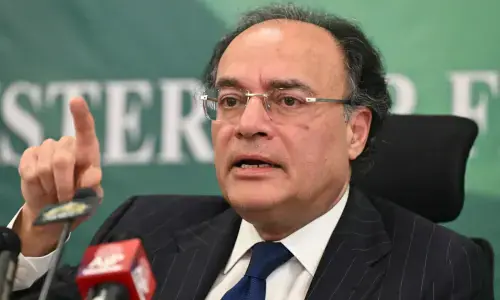
ISLAMABAD, Dec 15: The chief adviser to the prime minister, Sharifuddin Pirzada, has stressed the need for promoting the institution of Waqf (trust) for the socio-economic development of the Muslim countries.
He was speaking at a four-day seminar on Awqaf experiences in Brunei, Indonesia, Malaysia, Kuwait and Pakistan, which was jointly organized by the International Institute of Islamic Economic (IIIE) of the International Islamic University (IIU), Islamic Research and Training Institute (IRTI) of Islamic Development Bank, Jeddah, and Kuwait Awqaf Public Foundation.
“With the constructive changes in contemporary Awqaf laws, we can render effective services for promoting socio-economic development in Muslim countries to help alleviate poverty among masses and to contribute to education specially technical and medical education, including information technology, engineering and space sciences,” he maintained.
Mr Pirzada added that religion and generosity had been closely linked throughout human history. Religious institutions, buildings, and activities have been a major focus of giving in virtually all religious traditions and at all stages of development. Mr Pirzada said support for the poor and for the victims of disasters had an equally long and widespread history. In the Islamic world, from the earliest days, wealthy donors evolved a special form Awqaf to address needs for deserving on a sustainable basis.
He said it enabled individuals to recover and maintain their dignity as befitting their status as Allah’s greatest creation is one of the main reasons for such action. He added that it could take the form of religious support to strengthen religious values and institutions enabling to better equip to meet today’s challenges and human or professional support such as the provision of education and health services for those otherwise unable to obtain it, or of the sharing of knowledge to help marginalized individuals build different and better futures for themselves.
Earlier, Rector of the International Islamic University, Justice Khalilur Rehman Khan (retired) said Waqf had always been the hallmark in the Muslim history. He added that the main beneficiaries of the category of Waqf in Muslim societies were poor, orphans and prisoners. Other users of Waqf revenues included health services with construction of hospitals and spending on physicians, apprentices and patients. He gave the example of Spanish city of Cordova where 50 hospitals were constructed providing free medication and treatment and adding to that, once the patients had recovered, they would be transferred to the recovery room and discharged with new clothes and a reasonable money.
He stressed the need for the revival of those traditions in prevailing Muslim societies.