0
0

ISLAMABAD, Dec 8: Water and Power Minister Aftab Ahmad Khan Sherpao assured the Senate on Monday that the government would reduce the electricity tariff if the task force constituted in this regard recommended it.
“The task force has completed its report but the government wanted to get the input of the recently appointed Wapda chairman also,” said the minister winding up the debate on a motion.
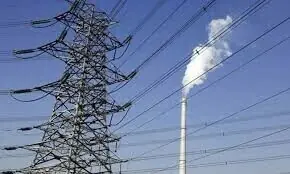
The motion piloted by Chaudhry Mohammad Anwar Bhinder had sought discussion on repeated increase in the tariff of the domestic, agriculture and commercial connections, transmission losses, inadequacy of supply, repeated power failures and the top-heavy management expenses of the Water and Power Development Authority.
The task force was set up on the directives of Prime Minister Mir Zafarullah Khan Jamali.
Senators Anwar Bhinder, Naeem Chatha, Mohammad Ali Durrani, Babar Ghouri, Naseer Mengal, Muheem Khan Baluch, Abbas Kumaili, Nisar Memon, Rozina Alam Khan, Gulzar Ahmad Khan and Tanvir Khalid criticized the policies of Wapda.
Mr Sherpao sought the support of parliamentarians in convincing the people of some areas not to indulge in power theft.
He said President Gen Pervez Musharraf and Prime Minister Jamali had repeatedly urged improvement in the efficiency of the power utilities.
He expressed the confidence that the electricity tariff would be reduced significantly during the next five years after the government’s obligation towards the independent power producers (IPPs) would end. The payment to IPPs increased to Rs114.9 billion last year from Rs53 billion in 1998.
In five years, the government’s debt servicing and capital obligations towards the IPPs would end, after which it would be possible to reduce the power rates, he said.
He said that by the end of 2007, the ratio of hydel power generation, which was 30 per cent, would be increased as the government was following a policy of commissioning a number of hydel power stations.
He said the current electricity generation was enough to meet the requirement but power failures occurred often due to strain on an obsolete and overburdened system.
The government had started investing in Wapda to improve its infrastructure and Rs5 billion had been earmarked in this regard while Rs14 billion would be injected into the Karachi Electricity Supply Corporation in five years for system upgradation and improvement, he said.
He said the first task assigned to the Wapda chairman was to rectify the complaints about meters.
He assured the house that the management cost was being reduced gradually by controlling overheads.
He said fluctuation in furnace oil price affected the generation cost but the tariff of Pakistan International Airlines, railways, postage, gas, petroleum and telephone had increased by much more than power rates.
He said transmission losses had remained at 26 per cent for the last few years but the government would like to reduce it.
He said Wapda was following a policy to privatize different distribution companies.