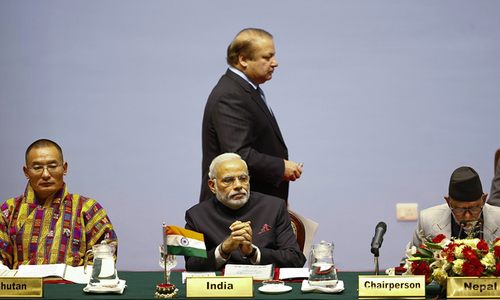
DHAKA: Bangladesh on Wednesday pulled out of the South Asian Association for Regional Cooperation (Saarc) summit to be held in Islamabad, a day after India said it was boycotting the event over a deadly cross-border attack on a military base.
Bhutan and Afghanistan were also reported to be withdrawing from the November summit after India announced late Tuesday that Prime Minister Narendra Modi would not take part, citing “increasing cross-border terrorist attacks in the region”.
Relations between the nuclear-armed neighbours have deteriorated sharply since a deadly attack on a military base in disputed Kashmir that New Delhi blamed on militants from across the border.
Pakistan denies any involvement in the attack, in which 18 Indian soldiers died.
But Modi, under pressure to act after the worst such attack in more than a decade, has threatened to make it a pariah state.
On Wednesday junior Bangladesh foreign minister Shahriar Alam confirmed to AFP by text message that Bangladesh would not attend the Saarc summit.
Indian media cited Dhaka as blaming “the growing interference in the internal affairs of Bangladesh by one country”, and said Bhutan and Afghanistan were also planning to withdraw.
The country was not named, but Bangladesh has in the past accused Pakistan of interference for protesting the execution of Jamaat-e-Islami leaders found guilty of war crimes.
South Asia analyst Ashok Malik said the pull-outs would have little practical impact on Pakistan but could push it closer to rival regional power China.
“It basically scores a symbolic and a political victory. As for Pakistan, this will push it even closer to China,” said Malik, head of the Delhi-based Observer Research Foundation's regional studies initiative.
Responding to India's move, Pakistan said it remained “committed to peace and regional cooperation” and accused New Delhi of perpetrating “terrorism” on its soil.
“As for the excuse used by India, the world knows that it is India that has been perpetrating and financing terrorism in Pakistan,” tweeted foreign ministry spokesman Nafees Zakariya late Tuesday, citing the capture of an Indian intelligence officer in Baluchistan earlier this year.
Pakistan has repeatedly accused India of interference in the southwestern province of Baluchistan, which borders Iran and Afghanistan and is afflicted by militancy and a separatist insurgency.