DHAKA: A wealthy tycoon who was a chief financier for Bangladesh's largest religious party refused on Friday to seek presidential clemency against his death sentence, an official said, paving the way for his imminent execution by hanging.
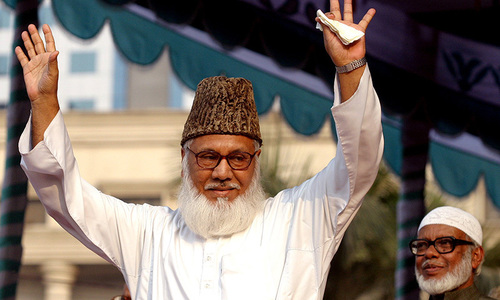
Mir Quasem Ali, a key leader of the Jamaat-i-Islami party, was sentenced to death by a controversial war crimes tribunal for offences committed during the 1971 independence conflict.
After the Supreme Court rejected his final appeal on Tuesday against the penalty, Ali declined to seek a presidential pardon, which requires an admission of guilt.
“Today (Friday) he announced his decision he won't seek mercy from the president,” Prasanta Kumar Bonik, a senior official at the Kashimpur high security jail where Ali is imprisoned, told AFP.
“The authorities will now decide when and where he will be executed,” he said.
The Supreme Court's decision was a major blow for the Jamaat-i-Islami party, which the 63-year-old Ali had helped to revive in recent decades.
Security has been stepped up at the prison, located some 40 kilometres north of Dhaka, after Ali announced his decision, local police chief Harun-or-Rashid told AFP.
Five opposition leaders including four leading political leaders have been executed for war crimes since 2013, all of them hanged just days after their appeals were rejected by the Supreme Court.
Their families said they had refused to seek a presidential pardon as they did not want to legitimise the whole trials process.
The war crimes tribunal set up by the government has divided the country, with supporters of Jamaat and the main opposition Bangladesh Nationalist Party (BNP) branding it a sham aimed at eliminating their leaders.
Ali, who after the war became a shipping and real estate tycoon, was convicted in November 2014 of a series of crimes during Bangladesh's war in 1971, including the abduction and murder of a young independence fighter.
His son Mir Ahmed Bin Quasem, who was part of his legal defence team, was allegedly abducted by security forces earlier in August, which critics say was an attempt to sow fear and prevent protests against the imminent execution.
The executions and convictions of Jamaat officials plunged Bangladesh into one of its worst crises in 2013 when tens of thousands of political activists clashed with police in protests that left some 500 people dead.
The religio-political party, which is banned from contesting elections, called a nationwide strike on Wednesday, labelling the charges against Ali as “false” and “baseless” and accused the government of exacting “political vengeance”.
A group of United Nations human rights experts last week urged Bangladesh to annul Ali's death sentence and to retry him in compliance with international standards.