
HAMMAMET: Policemen on horseback amble among the sunbathers and new metal detectors dot hotel entrances in Tunisia as the North African country seeks to bring back tourists a year after a seaside massacre.
Authorities and hotel managers hope improved security will help to win back the trust of holidaymakers on the first anniversary of the jihadist attack that killed 38 tourists at a beach resort.
“We used to sell sunshine and beaches. Today, we sell sunshine, beaches and security,” says Anis Souissi, who manages a seaside hotel south of Tunis.
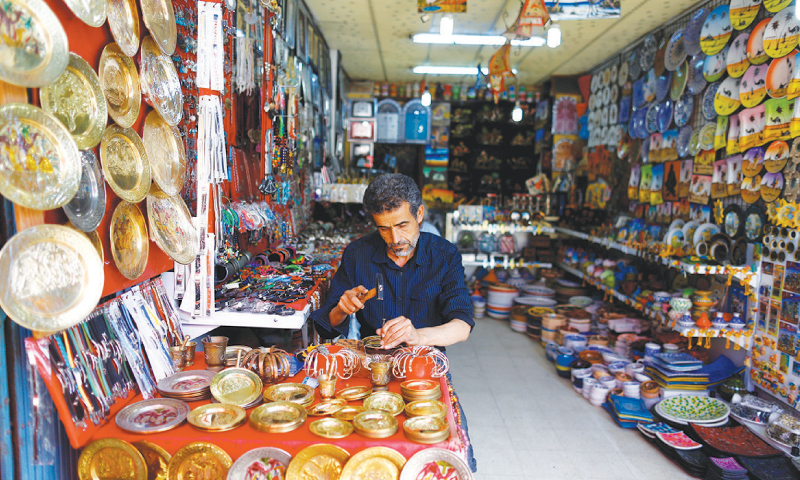
Before its 2011 revolution, Tunisia attracted almost seven million visitors a year, with its tourism sector accounting for seven per cent of GDP.
The beach bloodbath was the second of two deadly jihadist attacks that dealt heavy blows to the key industry last year, following four years of decline due to political instability.
Tourists fled in horror on June 26, as a Tunisian gunman pulled a Kalashnikov rifle from inside a furled beach umbrella and went on a shooting spree outside a five-star hotel near the city of Sousse.
It came just months after 21 tourists and a policeman were killed in another jihadist attack at the Bardo National Museum in Tunis.
A year on, the country’s tourism sector is still reeling.
Revenues for the first quarter of this year were down by 51.7 per cent compared to last year, according to the central bank.
European visitors to the country in 2015 had already dropped by 65.8 per cent compared to 2010.
Anyone suspicious checked
As high season kicks off in Tunisia, authorities and tourism firms are hoping to boost confidence and encourage bookings with increased security checks.
The interior ministry has said that 70 mobile police posts have been set up on beaches, with around 1,500 more policemen deployed to protect tourists this year — on top of 1,000 additional security personnel deployed last year.

In Yasmine-Hammamet, some 70 kilometres south-east of Tunis, policemen roam the beaches on foot, in quad bikes and on horses.
On the sand by the water’s edge, two policemen in uniform chat under a red gazebo discreetly marked “police”.
“If anyone looks suspicious — even if it’s a holidaymaker — we ask them for their ID,” says a plainclothes policeman.
After all, the Sousse attacker had hidden his weapon inside a parasol, he says.
Following the seaside killings, Prime Minister Habib Essid admitted that the police had been too slow to respond.
Tunisia’s tourism minister told AFP in late May that the government was making security a priority “because without security there can be no recovery” in the tourism sector.
The authorities had directed airports and hotels “to conform to international security norms and standards”, Selma Elloumi Rekik said.
But Anis Chemli, who manages a hotel in the island of Djerba in the country’s south-east, says adopting new security measures is “an added financial burden”.
Quads for the police
After last year’s beach attack, the Iberostar hotel in Djerba invested in eight extra security guards, four new sniffer dogs, 48 new surveillance cameras — each costing 2,000 dinars ($900) — and a metal detector that cost 9,000 dinars, he says.
“We’re still waiting for a bag scanner to be delivered,” he says, adding that the machine was an investment of 26,600 euros.
According to Chemli, hotels in the Djerba-Zarzis area have even banded together to buy the security forces eight quad bikes for them to better patrol their beaches.
Souissi, who manages Le Royal in Yasmine-Hammamet, says a third of the hotel’s new investments last year went towards better security.
The head of the Tunisian hotel industry federation, Radhouane Ben Salah, however says improved security should only be “part of the message” to promote Tunisia as a holiday destination abroad.
Focusing promotional material on security instead of what landscapes or cultural experiences the country has to offer could be “counterproductive”, he says.
One year after the Sousse attack in which 30 Britons were killed, the Foreign Office has kept in place an advisory against all but essential travel to Tunisia.
But Abdellatif Hamam, the head of Tunisia’s National Tourism Office, is optimistic.
“Our efforts are starting to pay off,” he says. Sixty out of 100 hotels that closed after the Sousse attacks have reopened.
“We invite journalists, tour operators and travel agencies to come and see for themselves.”—AFP
Published in Dawn, June 26th, 2016