ISLAMABAD: Nearly 39 per cent of Pakistanis live in multidimensional poverty with the highest rates in the Federally Administered Tribal Areas (Fata) and Balochistan. Though the national poverty rates have dropped from 55 to 39pc since 2004.
According to Pakistan’s first ever Multidimensional Poverty Index (MPI), launched on Monday, progress across different regions of the country is uneven. Poverty in urban areas is 9.3pc as compared to 54.6pc in rural areas. Disparities also exist across the provinces, it says.
The report says that over two-thirds of people in Fata (73pc) and Balochistan (71pc) live in multidimensional poverty. Poverty in Khyber Pakhtunkhwa stands at 49pc, Gilgit-Baltistan and Sindh at 43pc, Punjab at 31pc and Azad Jammu and Kashmir at 25pc.
At the district level, Larkana, Attock, Malakand, Toba Tek Singh and Hyderabad have made the most progress reducing absolute poverty headcount ratio by more than 32 percentage points.
In relative terms, the best performers were the districts of Islamabad, Attock, Jehlum, Lahore, Karachi and Rawalpindi.
On the other hand, some districts have experienced an increase in poverty incidence. In absolute and relative terms, the districts of Umerkot, Harnai, Panjgur, Killa Abdullah and Kashmore have witnessed the highest increase in incidence of poverty.
Deprivation in education contributes the largest share of 43pc to MPI followed by living standards which contributes nearly 32pc and health contributing 26pc. These findings further confirm that social indicators are very weak in Pakistan, even where economic indicators appear healthy.
The report found that the decrease in multidimensional poverty was slowest in Balochistan while it increased in several districts of Balochistan and Sindh during the past decade.
The MPI uses a broader concept of poverty than income and wealth alone. It reflects the deprivations people experience with respect to health, education and standard of living, and is thus a more detailed way of understanding and alleviating poverty.
Since its development by the OPHI and the UNDP in 2010, many countries, including Pakistan, have adopted this methodology as an official poverty estimate, complementing consumption or income-based poverty figures.
Speaking at the launch, Minister for Planning, Development and Reforms Professor Ahsan Iqbal said that the reduction of multidimensional poverty was one of the core objectives of Pakistan’s Vision 2025. He said that inclusive and balanced growth, which benefited everyone and especially the marginalised communities, was the government’s priority and an essential thing for promoting harmony in society. The MPI is a useful instrument budgeting, resource allocation and inclusion in policy making.
Pakistan’s MPI establishes baseline not for only Vision 2025, but also for Pakistan’s progress towards achieving the Sustainable Development Goals, and complements the consumption-based poverty estimates recently released by the government.
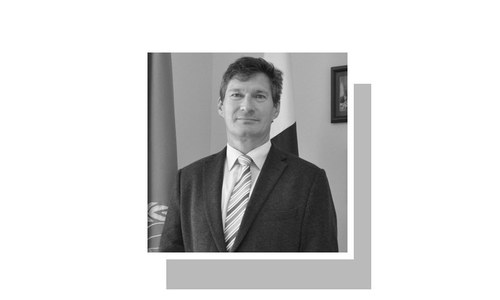
The UNDP Country Director, Marc-Andre Franche said: “We consider this a highly innovative approach because of its multi-faceted nature and the availability of estimates at the sub-national level. Multidimensional poverty provides useful analysis and information for targeting poverty, and reducing regional inequalities. Many countries are using MPI to inform government priorities for planning and it is encouraging to see the government of Pakistan adopting the MPI to complement monetary poverty measure in Pakistan”.
Director OPHI, Dr Sabina Alkire said: “Developed with input from all provinces, Pakistan’s MPI is very robust and we are pleased to work alongside the very strong academic and policy community in Pakistan.
Pakistan’s leadership will be of interest to over 40 other countries in the Multidimensional Poverty Peer Network who are using multidimensional poverty measures in the Sustainable Development Goals,” she said.
Published in Dawn, June 21st, 2016