NEW DELHI: Fear and anger. Those are the emotions that shadow Odole Emmanuel Opeyemi every time the Nigerian man steps out of his New Delhi apartment.
Every encounter with Indians is fraught with those feelings, whether he’s taking an autorickshaw or the Metro, buying vegetables or trying to find a spot to park his car. “When I sit down in the Metro, people sit away from me. Even old men and women will stand up as if any contact with me will give them a disease,” he said, describing the mixture of fear and revulsion with which most Indians treat Africans.
Opeyemi is among hundreds of thousands of Africans in India, drawn by better education and work opportunities. For them rampant racism is a daily battle in a country where their dark skin places them at the lower end of a series of strictly observed social hierarchies. Indians routinely perceive Africans as either prostitutes or drug dealers.
The daily indignities Africans suffer usually go undocumented both by the police and local media.That changed on May 20, when Congolese student Masunda Kitada Oliver was fatally attacked in a dispute over hiring an autorickshaw in New Delhi. Three men who insisted they had hired the vehicle beat him up and hit him on the head with a rock, killing him, according to police.
The death made the city’s African students, diplomats and business owners rally together demanding quick justice. The African Heads of Mission in New Delhi issued a statement asking the government to address “racism and Afro-phobia” in the country. “Given the pervading climate of fear and insecurity in Delhi, the African Heads of Mission are left with little option than to consider recommending to their governments not to send new students to India, unless and until their safety can be guaranteed,” the statement said.
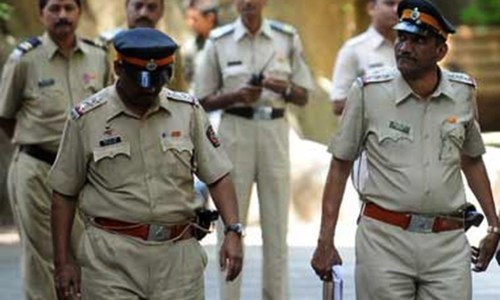
The killing and the outrage it sparked drew an unusually prompt reaction from local police and India’s foreign ministry. Two men suspected in the attack were arrested within a day, while a third remains at large.
Minister Sushma Swaraj tweeted that her ministry asked for “stringent action against the culprits”. But the ministry also said all criminal acts involving Africans should not be seen as racial in nature.
The bad press the country got as a result of the killing prompted India’s glacial government machinery to move quickly to try to address the issue.
An India-Africa art exhibition was cobbled together at government expense and on short notice. A protest planned by African students in the Indian capital was put off after government officials reached out to African student groups.
The police and government began holding workshops in neighbourhoods across the city to try to sensitise local residents about their African neighbours.There were other well publicised examples of anti-African prejudice in India before Oliver’s death.
In February, a Tanzanian woman was beaten and stripped naked by a mob in the southern city of Bangalore after a Sudanese student’s car hit an Indian woman. In September 2014, a video of three African men being beaten inside a security booth at a New Delhi Metro station went viral. For several minutes a large mob beat the men with bare hands and sticks and shoes as they climbed up the walls of the glass booth in terror. The police were absent. These incidents made it to the local newspapers. Hundreds more do not.
Prejudice is open in India. The matrimonial columns of the newspaper are strictly segregated along caste lines. Landlords in cities including New Delhi and Mumbai deny homes to people based on race and religion. Indians from north-eastern India, who look different because of their Asian features, are routinely harassed and have to endure being called names on the streets.
But the worst kind of discrimination is reserved for the Africans. In a country obsessed with fair skin and skin lightening beauty treatments, their dark skin draws a mixture of fear and ridicule. Landlords shun Africans in all but the poorest neighbourhoods, and in those they are charged unusually high rent. African students in the New Delhi neighbourhood of Chhatarapur reported paying 15,000 rupees ($225) a month for a single room and bathroom that would normally rent for 6,000 to 7,000 rupees. Strangers point at them and laugh — or gang up and assault them.
At a recent racial sensitisation session in Chhatarapur, the mutual distrust between the Indian landlords and their African tenants was glaring. “I’m scared,” said Nancy Joseph, a 23-year-old law student from South Sudan. That fear keeps her from visiting friends at night. The autorickshaw driver may refuse to take her. Groups of Indian men could gather and call her vile names just for fun. “Delhi is the worst city I’ve ever lived in,” said Eddie King, a student from Nigeria. He hasn’t made a single friend in the year that he has spent in the country. “I can’t talk to my classmates. They won’t even answer me. They pretend they don’t understand.”
The landlords say African tenants drink all day and play loud music all night, characterisations that Africans dismiss as unfair. “They stand drinking beer on the road. We feel scared crossing the area,” landlord Umed Singh said.
Whether this session succeeded in sensitising anyone was unclear. Police simply told both sides to try to understand each other.
King said he’ll leave India as soon as he finishes his studies next year. “The African man cannot work with Indians. That’s just the truth,” he said. Opeyemi, a 34-year-old soccer coach, said he will stay. It’s easier for him to earn a living here than in Nigeria, so he will endure the indignities. Those include hearing someone call out “Habshi!” — the Hindi word for a black person — as he tries to get on a bus. Recently, as he tried to park his car, someone called him “bandar” — a monkey. “The security was looking but they said nothing,” Opeyemi said. “We are scared. We don’t fight back because we know what will happen,” he said. “They will break your head with a brick.”—AP
Published in Dawn, June 10th, 2016