0
0

ISLAMABAD: Adviser to the Prime Minister on Foreign Affairs Sartaj Aziz has said that the Afghan Taliban have not yet responded positively to the efforts made by the Quadrilateral Coordination Group (QCG) to revive talks between them and the Afghan government, Dawn.com reported on Friday.
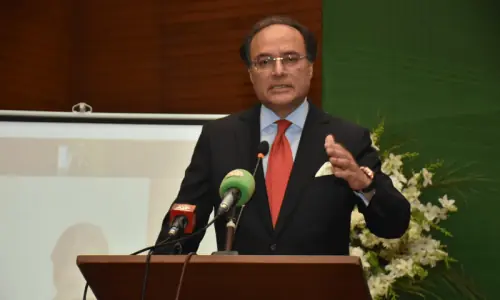
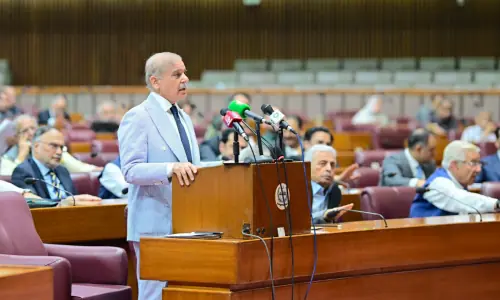
Addressing the fifth round of Pakistan-Afghanistan dialogue organised by the Regional Peace Institute on Friday, Mr Aziz said that the QCG, comprising Afghanistan, Pakistan, the US and China, has been making joint efforts to revive direct talks between the Afghan government and the Taliban, but the latter have yet to respond in a positive manner.
He, however, expressed the hope that the QCG countries, in line with their shared responsibility, would continue efforts for such talks to bring peace and stability to Pakistan.
Reminding the participants about Pakistan’s efforts in this regard, Mr Aziz said that apart from facilitating direct talks between the Afghan government and the Taliban last year, Pakistan hosted the fifth ministerial conference of the Heart of Asia-Istanbul Process, which reaffirmed the commitment of the participating and supporting countries for regional peace.
He stressed the need for wide-ranging discussions between Pakistan and Afghanistan at all levels and said that Pakistan was ready to engage with its neighbour at all levels to restore trust and strengthen bilateral relations.
The challenges
According to Mr Aziz, prolonged political instability in Afghanistan has created a fertile ground for foreign meddling after 9/11. Many militant groups have become increasingly dominant in the security landscape with growing insurgency in different parts of Afghanistan.
The announcement of the death of Mullah Omar in July 2015 not only scuttled the Afghan peace process, but also led to the splintering of the Taliban.
Negative statements about Pakistan emanating from Afghanistan tend to impede the constructive bilateral engagement. Pakistan, as a policy, has continued to show restraint in responding to such negative remarks, he said.
Vested interests have often tried to create the perception that Pakistan actually controls the Taliban. Such an impression breeds unrealistic expectations from Pakistan. The mistrust between the two countries has also affected the efforts for peace and stability in Afghanistan.
Mr Aziz said that the return of Afghan refugees is also a major challenge in Pakistan-Afghanistan relations. Over three million Afghan refugees are present in Pakistan. Besides being a continuing economic burden, refugee camps have also become a security concern as they provide sanctuary to terrorists and insurgents.
The long porous border between Afghanistan and Pakistan is frequently used by miscreants, including terrorists, militants, human and drug traffickers and criminals. For effective counter-terrorism efforts, border controls to regulate movements across the border is vital.
Published in Dawn, May 21st, 2016