114
114
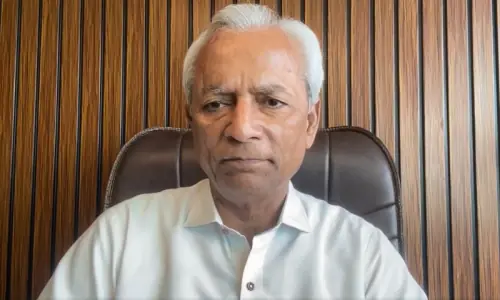
WASHINGTON: “More than ever,” says legendary US investigative journalist Seymour Hersh when asked if he still believes Pakistan helped the United States get Osama bin Laden (OBL).
When the Pulitzer Prize-winning journalist first made this claim in an article published last year, it shook Washington and forced the White House to reject the story as false. Major US media outlets also rejected his claim as incorrect.
But Mr Hersh repeated the claim in his new book, “The Killing of Osama bin Laden,” published this week, insisting that he was right.
In an interview to Dawn on Tuesday, Mr Hersh said that since last year he had seen new evidence that cemented his belief that the official US account of how OBL was found in his compound and killed was deceptive.
He reiterated his claim that Pakistan had detained OBL in 2006 and kept him prisoner with the backing of Saudi Arabia. The United States and Pakistan then struck a deal: The US would raid bin Laden’s compound but make it look as if Pakistan was unaware.
“I learned a lot more than I knew in the beginning,” he said.
“Pakistan is in constant alert because of India. Their radars are watching, their F-16s are up all the time,” said Mr Hersh while arguing that it was not possible for US helicopters to enter Abbottabad without alerting the Pakistanis.
He said the then army and ISI chiefs had made this deal with the Americans, which upset other Pakistani generals.
“The then head of Pakistan’s Air Defence Command was very, very upset. He was ready to go public,” said Mr Hersh, claiming that the disgruntled general was made PIA chairman after his retirement to compensate for his silence.
In an interview to Democracy Now, a network of more than 1,400 radio and television outlets, Mr Hersh said the US and Pakistan had jointly created the ‘myth’ “we discovered” where he was living.
“What I know is … that in August of 2010, a Pakistani a colonel … came into our embassy, went to the then CIA Station Chief Jonathan Bank, and said: ‘We’ve had bin Laden for four years’.”
Mr Hersh told Dawn that the colonel was later moved to the US and was now living somewhere near Washington.
“The Pakistani intelligence picked him (bin Laden) in the Hindu Kush area, built the compound in Abbottabad and put him there,” he said. “Pakistani officials did so because the Saudis asked them to. The Saudis did not want Americans to interrogate OBL.”
According to Mr Hersh, when the CIA asked Pakistani officials to make the May 2, 2011, operation at OBL’s compound in Abbottabad a surprise raid, they agreed “because they had kept OBL in custody without telling us”.
The Americans were already very upset and the Pakistanis did not want to make it worse, he added.
“I wrote the name of the station chief, Jonathan Bank, something you are not supposed to do, but he did not attack me for doing this. He did not contradict my story, although if there is one guy who can end my story, it is him,” Mr Hersh said.
“Of course not, I have a great deal of sources here,” said Mr Hersh when asked if he based his story entirely on Pakistani intelligence source.
“I was going to take a chance that Bank would not succumb to pressure. I knew a lot about him. He’s a Harvard grad, very bright guy, very competent. And I just didn’t think he would be trotted out by the CIA to say, ‘What? What’s Hersh writing about? I don’t know anything about a walk-in,” Mr Hersh told Democracy Now.
“I did have more contact with people in the ISI after I wrote. I learned much more, that gave me much more flesh on the skimpy bones I guess I had,” he said.
Published in Dawn, April 27th, 2016