KARACHI: We are living in the age of noise. These days, all we hear around us is the noise coming out of television sets or caused by traffic. In such a situation what satisfies me is the silence of books. It’s a profound, purposeful silence.
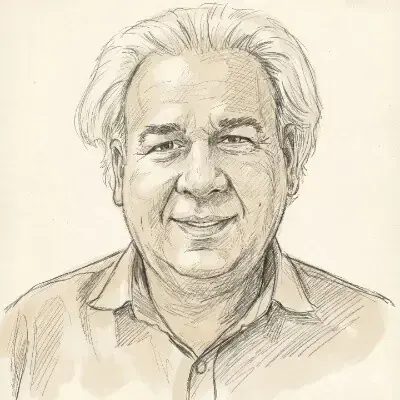
This was eloquently put by former senator and federal minister Javed Jabbar while speaking to a group of students and teachers at a programme on the topic of ‘Our literary and educational legacy’ organised at the University of Karachi to celebrate World Book Day.
Mr Jabbar, who was the chief guest on the occasion, said in the world Pakistan was being seen in the wrong light, which was not entirely justified. He said in terms of providing archival information we were ahead of Britain by 10 years. He said, according to Britain’s National Archives Act, classified documents could be declassified after 30 years, whereas Pakistan allowed them to declassify after 20 years. But, he said, we generally did not use the archives.
Highlighting the link among education, books and heritage, Mr Jabbar said now we lived in the age noise. All we heard around us was the noise either coming out of television or caused by traffic. In such a situation, he said, silence of books, which was profound and purposeful, satisfied him. He said it created a relationship between writer and reader without the intervention of noise.
Referring to the noise coming out of TV, he said: “The intrusion of other senses between the originator and recipient of the content distorts and destroys the content.” He said the nature of every media was that it suppressed some part of information. Books, on the other hand, he said, were not written in haste. Alluding to the topic of the programme, he said he felt some part of history, if not a large part of it, too was silent, partly because it was no longer with us. So, he asked, how did we retain the bond with history, and termed it a challenge. He said some part of that silence was deliberate. “Much of our history is incorrect,” he remarked. He said we thought history began when Islam came to South Asia. He said it was right that Islam had a major impact on the region and continued to do so, but the region existed thousands of years before Islam and had seen many civilisations. He gave the example of Mehrgarh in that context.
Mr Jabbar said dates did not constitute history; rather, history was made of truth. “But what is truth?” he said. “The more you read about history the more you realise how little you know because it’s rooted in research.” He urged the students to read a book for 30 minutes every day.
After his address Ravinder L. Jha of the Sindh Archives showed a 10-minute documentary of his department. Kaneez Fatima gave a presentation on Dr Mahmood Hussain Library, followed by Naseem Ahmed’s presentation on the rare books and manuscripts housed in the library.
Dr Kaleemullah Lashari said the fact that words were written on small seals discovered from Mehrgarh suggested that the written word had been part of the region for the last 9,000 years. He said while excavating in Banbhore the one question that perturbed archeologists from 1958 to 1963 was whether this was the historic city of Debul. Their question remained unanswered because no one could read what was written on the artifacts found there, he said.

Dr Syed Jaffer Ahmed highlighted the significance of libraries and archival material by recounting the time when he was in England where he visited the British Library and India Office Library. He said at the latter he saw data for each soldier of the East India Company that had been to the subcontinent. On the other hand, we, he said, destroyed the things related to our past. He said it happened both on a state level and on the level of society.
The floor was then opened for questions and answers in the last session of the event, presided over by the vice chancellor of the University of Karachi, Prof Dr Muhammad Qaiser.
Earlier Prof Malahat Kaleem, former dean of the arts faculty, welcomed the guests.
Outside the auditorium where the programme was held, the Sindh Archives Department and Dr Mahmood Hussain Library had put on display some rare books, manuscripts and maps. It was astounding to see the kind of material that the library has. For instance, among the displayed material there was the famous masnavi by Maulana Rum published in 1352 Hijri, alongside Arabic makhtootay published in 965 Hijri. Another striking exhibit was History of Hindostan (1770) translated from Persian. The Sindh Archives, too, had some interesting things on view, especially centuries-old maps of different parts of the province.
The programme was organised by the Library and Information Science Department, University of Karachi, Sindh Archives and Dr Mahmood Hussain Library.
Published in Dawn, April 23rd, 2016