0
0

There was a lengthy period in the long history of international cricket when the West Indies were a dominating and fearsome force. Legends such as Viv Richards, Michael Holding, Gordon Greenidge, Andy Roberts, Joel Garner, Malcolm Marshall, etc., gelled a group under the captaincy of Clive Lloyd into the world-class cricketers that they were.
When Lloyd was gone, Richards assumed command of the team and the West Indies merrily moved on from one success to another against opposition who rarely challenged them — barring Pakistan who in the spring of 1988 notably shared honours in an away Test series in a fascinating battle for supremacy.
But sadly with the passage of time, West Indies started to slide down the ranking and helplessly watched their opponents — who they regularly used to brush aside with disdain — overtake them. The hunters became the hunted.
Under-19 cricket is truly the breeding ground for future stars of the game
The glory days of the 1980s were a distant memory and the West Indies were no more the sought-after side for the rest of the cricketing world. In global limited-over competitions they won the first two editions of the senior World Cup in the 1970s and never made it to the final since 1983 until they won the ICC Champions Trophy in 2004.
Their winning of the 2012 ICC World Twenty20 proved just a flash in the pan. At the Under-19 level, West Indies had reached one World Cup final in 2004 when Pakistan, led by Khalid Latif, won the first of two titles — Pakistan’s other World Cup triumph came in 2006 when the Sarfraz Ahmed-led side defeated India in a low-scoring final in Colombo.
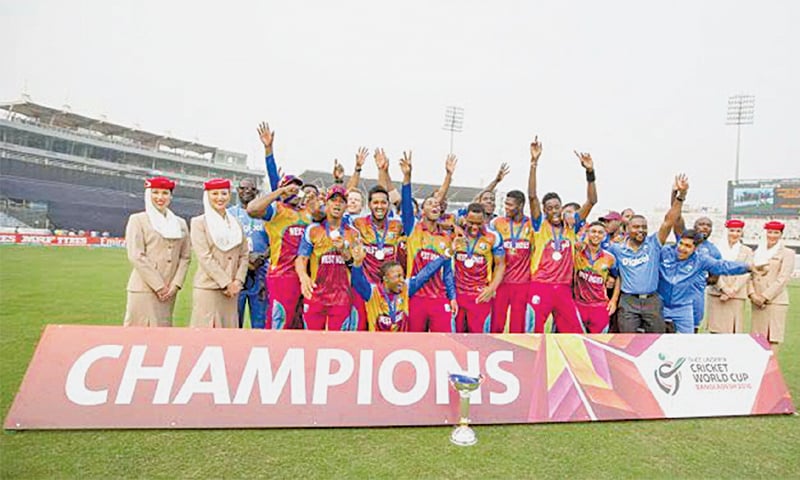
But all that changed dramatically in the 11th edition of the Under-19 World Cup, held in Bangladesh recently, when West Indies upstaged hot favourites India by five wickets in a low-scoring final at Dhaka’s Sher-e-Bangla National Cricket Stadium after having come through a phase where they courted controversy.
Just days leading to the biennial world championship, West Indies suffered a 3-0 hammering against hosts Bangladesh in a one-day series and most experts had given up that they would pose no major threat at the World Cup in familiar conditions.
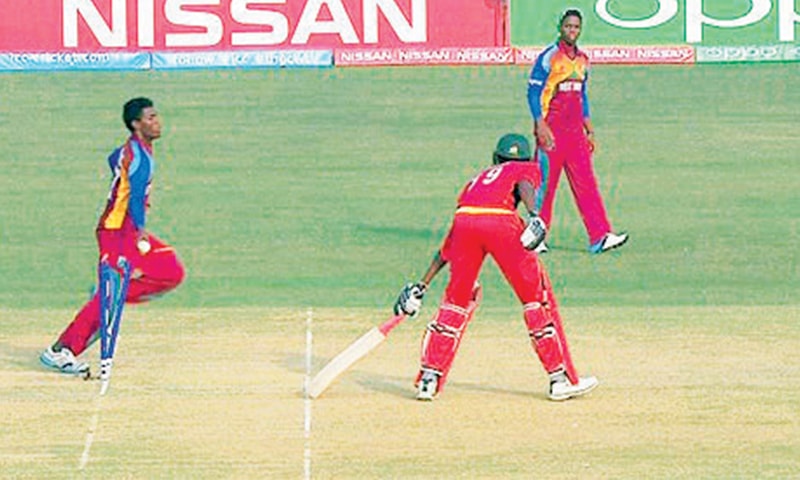
And yet West Indies not only dispelled the pre-tournament prophecy, they emerged as popular champions after Zimbabwe’s No 11 Richard Ngarava was run out on the first ball of the last over at the non-striker’s end for leaving his crease by fast bowler Keemo Paul in an incident which led to his team being labelled as absolutely disgraceful.
A defeat in that game at Chittagong, which West Indies won by only two runs after Paul, instead of starting his delivery stride, ran past the wicket to quickly remove the bails with the ball in his right hand and appealed for a run out. The umpires conferred and asked the West Indies if they wanted to withdraw the appeal, which quite obviously they flatly refused to rescind. The on-field officials referred the decision to the third umpire who reviewed the TV footage and correctly ruled that Ngarava was just out of his ground when the bails were removed.
The decision secured a spot in the quarter-finals and condemned Zimbabwe to the second-tier Plate Championship while West Indies were roundly castigated for their lack of sportsmanship spirit at this level of cricket despite acting within the rules of play. The act of Mankad also highlighted the gamesmanship in the young breed of West Indian cricketers.
The Calypso bandwagon then nailed Pakistan rather easily in the last of the quarter-finals in Fatullah, comfortably reaching a target of 228 with five wickets and 10 overs to spare before breaking Bangladeshi hearts in a thrilling semi-final victory by three wickets in a penultimate-over finish.
West Indies’ only loss came at the group stage when England had defeated them in the opening fixture in Chittagong. Their rivals in the final, India, under the guidance of batting great and former captain Rahul Dravid, had a smooth ride until then and were just one success away from lifting their fourth World Cup, something no other nation had done.
In the end, India remained — along with Australia who ironically chose to stay at home rather than travel to Bangladesh after citing security apprehensions — where they previously stood but all credit to West Indies for winning just their third match against the Indians in 10 World Cup meetings. The defeat was only India’s second in 22 games since the start of 2014 with the other loss being against England in the quarter-final of the previous mega event in the United Arab Emirates.
The biggest disappointments were South Africa and New Zealand. Both failed even to qualify for the Super League phase. South Africa, who won the 2014 World Cup after defeating Pakistan in the final at Dubai, went out of contention after losing to Bangladesh and Namibia in the pool fixtures.
New Zealand and Sri Lanka are the only major teams who have never won an Under-19 World Cup title. The New Zealanders were sent packing by Nepal and India in two straight pool losses and their solitary comfort zone was the win over South Africa in the 11th place playoff. The Zimbabweans were unable to forget the heartbreaking encounter against West Indies and saw Afghanistan win the Plate Championship final against them in Cox’s Bazar.
The highpoint for Pakistan was their brilliant run-chase against England in the fifth place playoff at Fatullah’s Khan Shaheb Osman Ali Stadium. They made light meal of a 265-run target as Zeeshan Malik and Saif Badar inspired them home with just three wickets down and 41 deliveries left unused against a side that included players who had experience of playing first-class cricket back in England.
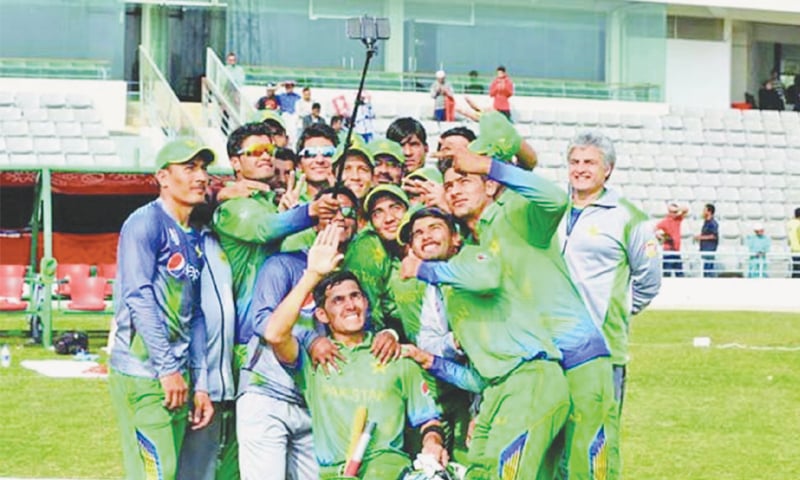
Fielding a raw squad with no member having previous World Cup experience compared to most of other competing teams and having in Mohammad Masroor, a head coach who was asked to prepare them for the tournament barely a handful of days before the squad had landed in Bangladesh, the young Pakistanis received a raw deal from the PCB chief Shahryar Mohammad Khan, who even ordered a detailed inquest into the team’s failure to make the final.
Overall, the tournament unearthed a host of future stars. There are several members from the champion team who could be playing a big part in the revival of West Indies cricket at the senior level. The 6ft 4in giant Alzarri Joseph is the most likely to be elevated to the senior ranks in the coming months.
A big strapping fast bowler from Antigua, Joseph was easily the quickest around at this World Cup in terms of speed and often delivered in the 80-90mph range and was clocked to have bowled the fastest delivery of the competition at 91.5mph. Only time will decide whether he has the capacity to follow in the footsteps of Wesley Hall, Charlie Griffith, Holding, Roberts, Colin Croft, Curtley Ambrose and Courtney Walsh.
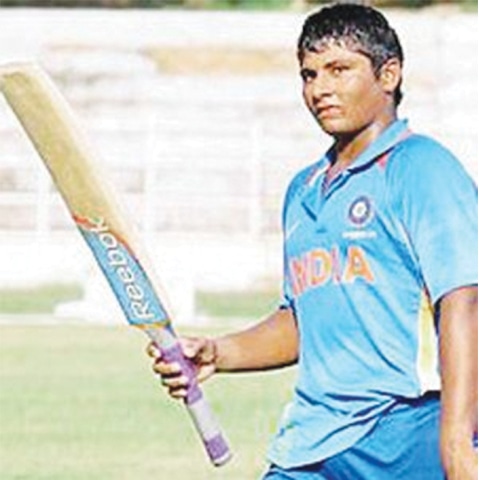
Sarfaraz Khan, a stocky 18-year-old right-hander, was the lynchpin of Indian batting throughout the World Cup despite not converting any of his five half-centuries into a hundred. Like Sunil Gavaskar and Sachin Tendulkar, arguably the greatest batsmen to come from that country, Sarfaraz also hails from Mumbai. He has definitely got the talents to get to the top.
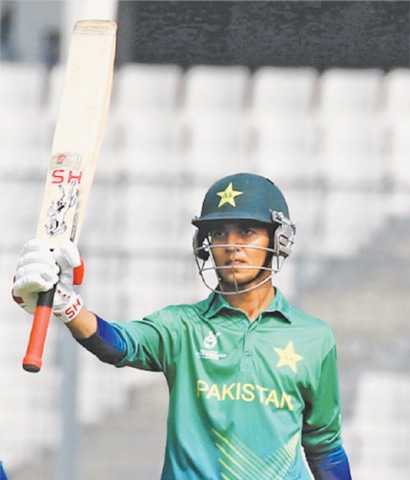
Hasan Mohsin was the pick of Pakistan players. An all-rounder who used to bowl occasional leg-breaks, the Karachi lad became a handy seamer under the shrewd guidance of Masroor. His batting exudes promise for the future. Wicket-keeper Umair Masood, who is from Rawalpindi, also exhibited abundance of exuberance with the bat and alongside Hasan he was the only other century-maker for Pakistan in this World Cup.
All in all, it turned out to be a successful World Cup and Australia’s no-show virtually went unnoticed. Surely they will turn up when their Trans-Tasman neighbours New Zealand to host the next edition in the early months of 2018.
But the last word of the 2016 World Cup should be exclusively reserved for Keacy Carty, the West Indies batsman who was voted man-of-the-match in the final, when he blurted out: “Singles could have done it. We just needed 146 from 300 balls!”
Published in Dawn, Sunday Magazine, February 28th, 2016