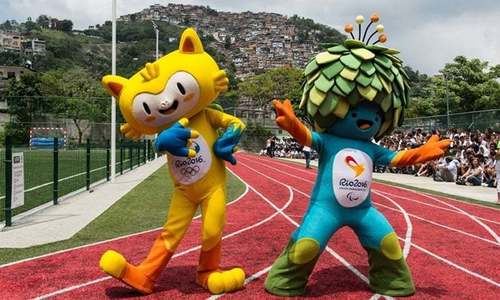
RIO: Olympic construction projects have turned Rio upside down, but a harsh economy and some major failures are overshadowing organisers' hopes of emulating Barcelona's Olympian transformation back in 1992.
Rio sees its choice as South America's first Olympic host city as a chance to shine.
Some improvements are highly visible, such as stadiums, a tramway through a central avenue, and major transport projects including a dedicated express bus lane system and extension of the metro.
“We will leave Barcelona in the dust,” boasted Mayor Eduardo Paes last year.
But with swaths of the city mired in crime and poverty, traffic snarled, and the beautiful bay where sailing events will take place an open sewer, that ambition sounds far-fetched.
So how do Rio's legacy promises stack up?
Transport for all?
When the Olympic flame goes out at the end of the Games on August 21, Rio will have a public transport system serving 66 per cent of the population, against 38 per cent now.
Ten miles (16 kilometers) of new metro line will connect the tourist-friendly Ipanema neighborhood with the posh western district of Barra, where the Olympic Village is located. The trip will take 13 minutes compared to the current nightmarish car journey of one to two hours.
“This will be the biggest legacy of the Olympics,” Rio's deputy transport secretary Bernardo Carvalho said.
Officials say the line will carry 300,000 people a day and take 2,000 cars an hour off the roads. The metro is also linked to a new 72-mile system of express buses in dedicated lanes, with each bus estimated to remove the need for 126 private cars.
The networks are impressive but critics say the metro extension serves richer, already relatively well-connected neighborhoods, while transport in the poor majority of Rio remains patchy.
No white elephants?
The mayor promises no repeat of the embarrassing aftermath of Brazil's 2014 hosting of the World Cup, where money was poured into building stadiums that no one needed.
The handball arena will be dismantled and rebuilt into four public schools, while the Olympic aquatic sports center will become two swimming centers.
Other installations are scheduled to remain as they are, but with new uses.
The mayor's office says that one of the gymnasiums will become an experimental sports school, while another will become a high-level training center.
The Deodoro park, one of the big hubs during the Games, will be opened to the public, benefiting one of Rio's poorest areas.
However, with Rio's economy in the doldrums, there are questions over how much demand there'll be on the real estate market for the privately built Olympic Village, a cluster of towers due to be marketed as high-end apartment blocks.
It's also unclear how much use there'll be of the golf course, controversially built in an ecologically sensitive zone. It's destined to become Brazil's first public golf facility, but very few Brazilians play the sport.
Water quality?
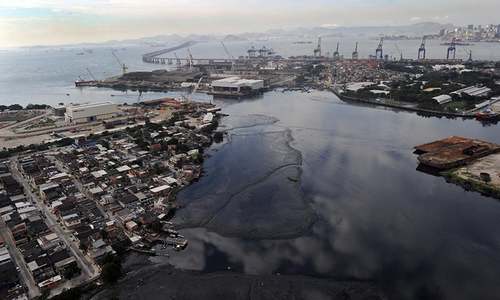
The most glaring letdown has been the failure to clean Guanabara Bay, the beautiful natural harbor where the sailing and windsurfing will take place.
Guanabara has been polluted by decades of failure to build proper sewage systems in Rio. A boom in oil industry facilities added to the problem.
Initially the government promised to get 80 per cent of sewage entering the bay treated, but quietly abandoned the goal. Only about half of Rio's sewage is treated.
Failed projects over the years are estimated to have cost $2.5 billion.
There are also pollution worries at the lagoon where rowing will take place, but authorities say testing shows there is no danger at any of the sites.
Better than Barcelona?
“The influence of Barcelona continues in many aspects,” said Emilio Fernandez Pena, director of Olympic studies at the Autonomous University of Barcelona.
The Spanish city hosted the 1992 Games and put 80 per cent of its budget into urban improvement. Tourism numbers shot up from 1.7 million in 1991 to 7.9 million in 2014.
In Rio, the current number of tourists each year is about 1.5 million and the share of Olympic investment dedicated to urban improvement is 64 per cent.
With an Olympic budget of approximately $9.5 billion, the city hopes to see a similar boost in fortunes.
Improvements like the transformation of the port area with a museum, a plaza and new tunnels look good, as do miles of new cycling paths.
But Rio's slum neighborhoods, known as favelas, remain desperately poor and violent — no-go areas for tourists and even sometimes police.
And as if the national nine per cent rate of unemployment was not bad enough, a huge question mark now hangs over the fate of the 30,000 people employed in pre-Olympic construction.