We were never good at taking rejection as a people, but as men, Pakistanis don’t even make it passably human. They retaliate with counter accusations, and if that does not match the insult their deified egos faced, they resort to violence.
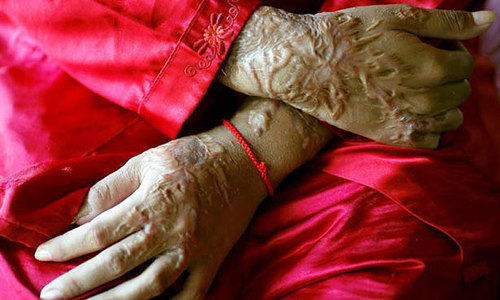
Sometimes even violence is insatiable, particularly when it comes to intimate relationships. In Multan, a rejected suitor set the woman who said no to his romantic advances on fire.
He doused Sonia Bibi, 20, in a flammable solution and lit a match to her. An act of barbarity that left half of her body burned.
What language can women employ to explain a no that spares men the ache and the resultant backlash?
Also read: Violence against women ‘most rampant’ in Punjab
Suppose though that such a language was invented, the problem would still remain — many men do not recognise the right of a woman to say no. Period.
Our culture supports it
When women are getting married, their consent is among the most downplayed aspects of the marriage.
The more silent the nod, the less obtrusive and the more ladylike. If she were sobbing instead of nodding, extra points for that! The stakes are high, she is dolled up and perfumed. Saying no is as unimaginable as rejecting a 5-course Michelin Star meal after the dessert is served.
Arundathi Roy aptly called this phenomenon of dolling up brides in South Asian culture: Polishing firewood.
We glorify silent women and demonise the rebels.
This is perhaps why last week in Kabul a woman was stoned to death for fleeing a marriage she rejected with a suitor of her choice.
Our professional culture supports it too. When men in powerful positions approach their female subordinates, it is considered fair game because she has already determined that there is more to life than achieving the perfectly circular roti.
Women at the workplace are constantly harassed though physical advances, work pressure and excessively low remuneration. They have little or no recourse without ruining their career prospects.
Also read: How Pakistani organisations don't want to deal with pregnant professionals
Our TV and film culture is equally to blame. Women are not just routinely staked and harassed until they say yes because no means yes, but a slap to rattle them to love their oppressor is pretty routine on our shows.
When was the last time we watched a rejected man on our television screens take it with grace and move on?
And so does our prevalent socio-religious doctrine. Somehow the stories of empowered Muslim women have all been pushed back into the cervices of history and we are left with a male-dominated historical narrative.
There is a clear right of refusal women are granted in Islam but it is downplayed with a ferocity.
The stoning and the setting ablaze are indications that we are no longer content with acting out like someone normally would – writing despondent poetry or indulging in masochistic drugs or obsessive prayers for the beloved to have a change of heart.
Instead, the man is free to act out because society recognises his passions, not hers.
So great was the passion of this 24-year-old man, who has been taken into custody, that he so wrathfully set on fire a living, breathing Sonia Bibi.
We can be assured, he will at least get a gentle slap on the wrist. Meanwhile, Sonia Bibi has died. We can be assured, she was in excruciating anguish and misery in her last hours.
Perhaps, this is a world where women are only allowed to half live — with their bodies and not their will.
Almost like the witch burning trials of the 1600s, these ghastly acts on women for expressing what is their command over their own lives is borne out of the need to create a patriarchal social order, where women don’t step out of line.
Thankfully, though not quickly enough, that line is fading in Pakistan.
Pakistani women are receiving education and entering the workforce now more than ever before. They have access to a freer media and the Internet too; they have braver fathers, brothers and husbands.
These women are speaking out despite the knowledge that sometimes they will end up dead, not that most of the time men will not have the choice of resorting to violence. That is the kind of country Pakistan needs to be — a country where men learn that women are their equal and have the right to have desires that don’t include them.